What Is a Neodymium Magnet? Properties, Grades, Applications, and Safety
A neodymium magnet is a type of permanent rare-earth magnet made primarily from an alloy of neodymium, iron, and boron. It is commonly called an NdFeB magnet, neo magnet, or neodymium-iron-boron magnet.
Neodymium magnets are the strongest commercially available permanent magnets by volume. Their high magnetic strength allows engineers to produce smaller, lighter, and more efficient products for electric motors, sensors, speakers, magnetic assemblies, wireless charging systems, consumer electronics, medical devices, and industrial equipment.
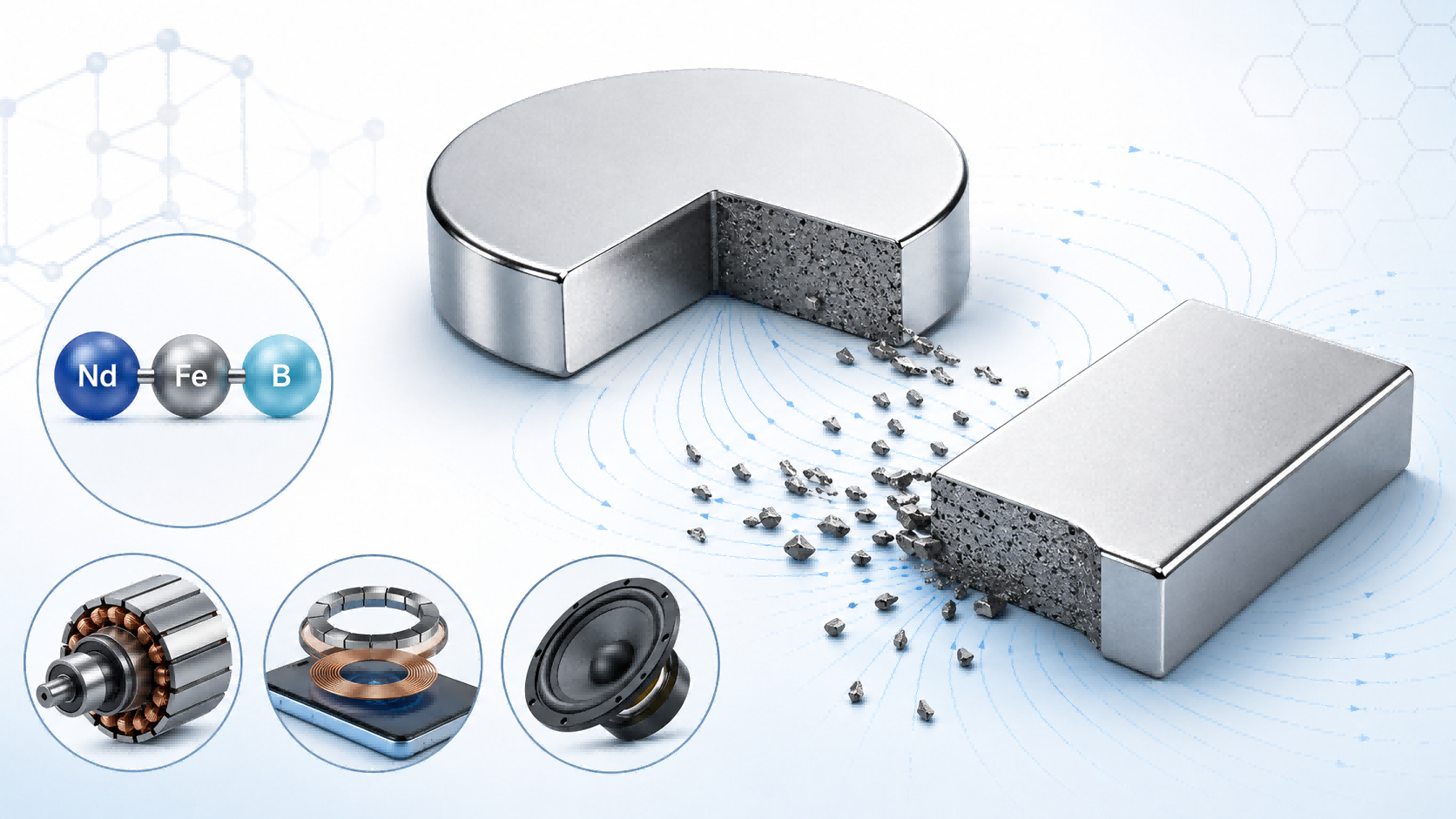
Quick Answer: What Is a Neodymium Magnet?
A neodymium magnet is a high-strength permanent magnet based on the Nd₂Fe₁₄B crystal structure. It generates a strong magnetic field without requiring a continuous electrical power supply.
Its main characteristics include:
-
Extremely high magnetic strength
-
Compact size and low weight
-
High resistance to demagnetization
-
Multiple available grades and shapes
-
Brittle mechanical properties
-
Sensitivity to corrosion and high temperatures
-
Wide use in motors, electronics, sensors, and magnetic assemblies
What Are Neodymium Magnets Made Of?
The three primary elements in an NdFeB magnet are:
| Element |
Symbol |
Main function |
| Neodymium |
Nd |
Provides strong magnetic anisotropy |
| Iron |
Fe |
Contributes to high magnetic strength |
| Boron |
B |
Helps form and stabilize the Nd₂Fe₁₄B crystal structure |
Although they are called neodymium magnets, they are not made from pure neodymium. Commercial formulations may also contain dysprosium, terbium, praseodymium, cobalt, aluminum, gallium, copper, or other elements to improve temperature stability, corrosion resistance, manufacturability, or magnetic performance.
The exact formulation depends on the magnet grade and its intended operating environment.
Why Are Neodymium Magnets So Strong?
Neodymium magnets are powerful because the Nd₂Fe₁₄B crystal structure has high magnetic anisotropy and a high energy density.
In simple terms, magnetic anisotropy helps the magnetic domains remain aligned in a preferred direction. This alignment produces a strong and stable magnetic field. The magnet can therefore deliver considerable holding force even when its dimensions are relatively small.
Magnet strength should not be evaluated only by surface field or pull force. Engineers normally consider several magnetic properties together:
-
Remanence (Br): the magnetic flux density remaining after magnetization
-
Coercivity (Hcb): resistance to magnetic reversal
-
Intrinsic coercivity (Hcj): resistance to permanent demagnetization
-
Maximum energy product, (BH)max: the magnet’s overall energy density
-
Operating temperature: the temperature range in which the magnet can function reliably
The final performance also depends on the magnet’s shape, size, magnetization direction, air gap, coating, working temperature, and surrounding magnetic circuit.
What Do Neodymium Magnet Grades Mean?
Neodymium magnet grades usually begin with the letter N, followed by a number such as N35, N42, N48, or N52.
The number is associated with the magnet’s maximum energy product. A higher number generally indicates a higher potential magnetic energy density. However, a higher grade is not automatically the best choice for every application.
Common commercial grades include:
| Grade |
Relative magnetic strength |
Typical use |
| N35 |
Standard |
General magnetic assemblies and holding applications |
| N38–N42 |
Medium to high |
Electronics, sensors, speakers, and industrial components |
| N45–N48 |
High |
Compact motors and high-performance magnetic systems |
| N50–N52 |
Very high |
Applications requiring maximum strength in limited space |
Some grades include temperature-related suffixes such as M, H, SH, UH, EH, or AH. These suffixes indicate different intrinsic coercivity and temperature-performance categories.
For example, an N42SH magnet may offer lower room-temperature magnetic output than an N52 magnet of the same size, but it can be more suitable for an application exposed to elevated temperatures.
The actual maximum operating temperature must always be confirmed using the manufacturer’s datasheet and the application’s magnetic load line.
Common Neodymium Magnet Shapes
NdFeB magnets can be manufactured in many configurations, including:
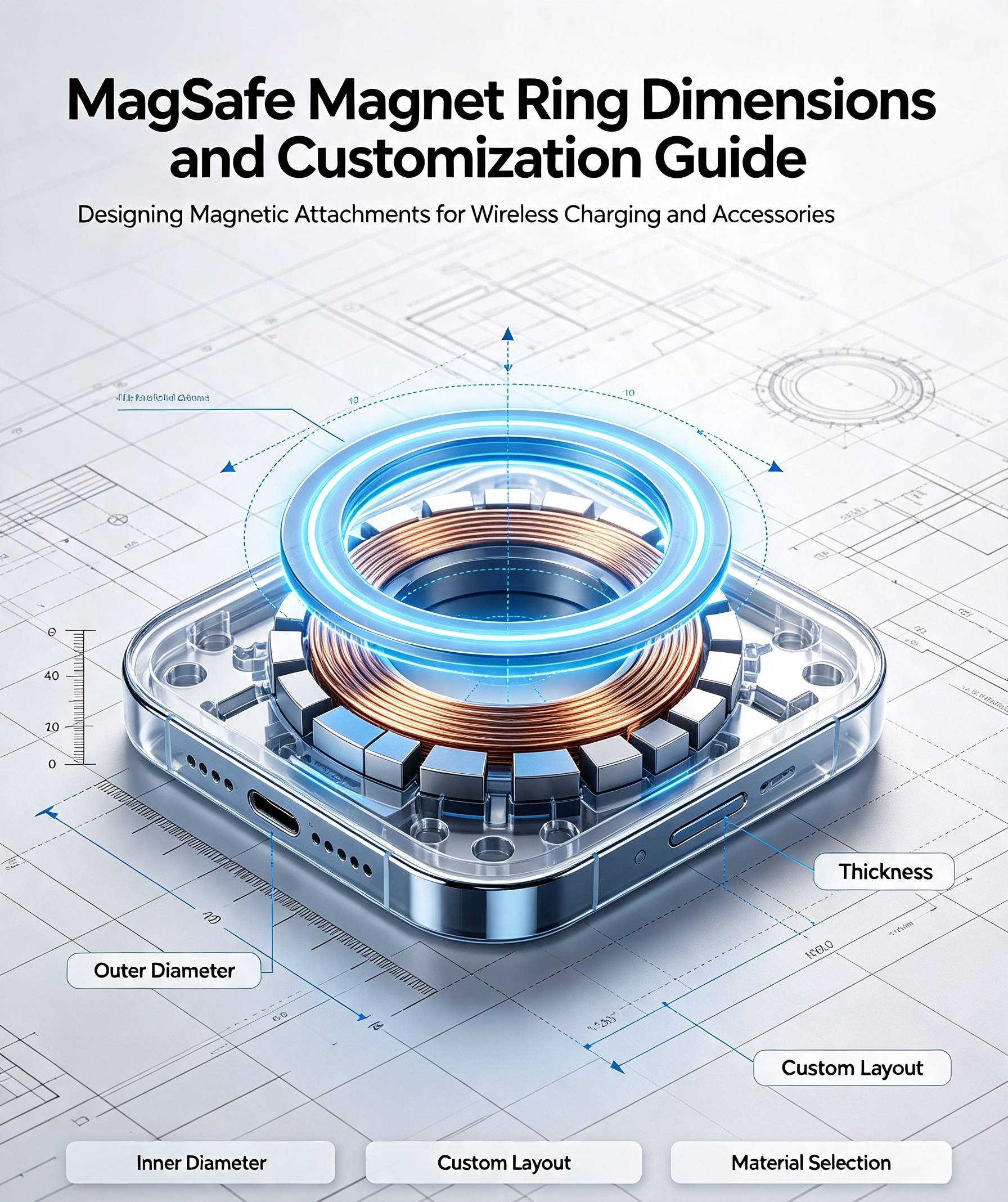
The shape influences the magnetic field distribution, assembly method, mechanical strength, and manufacturing cost.
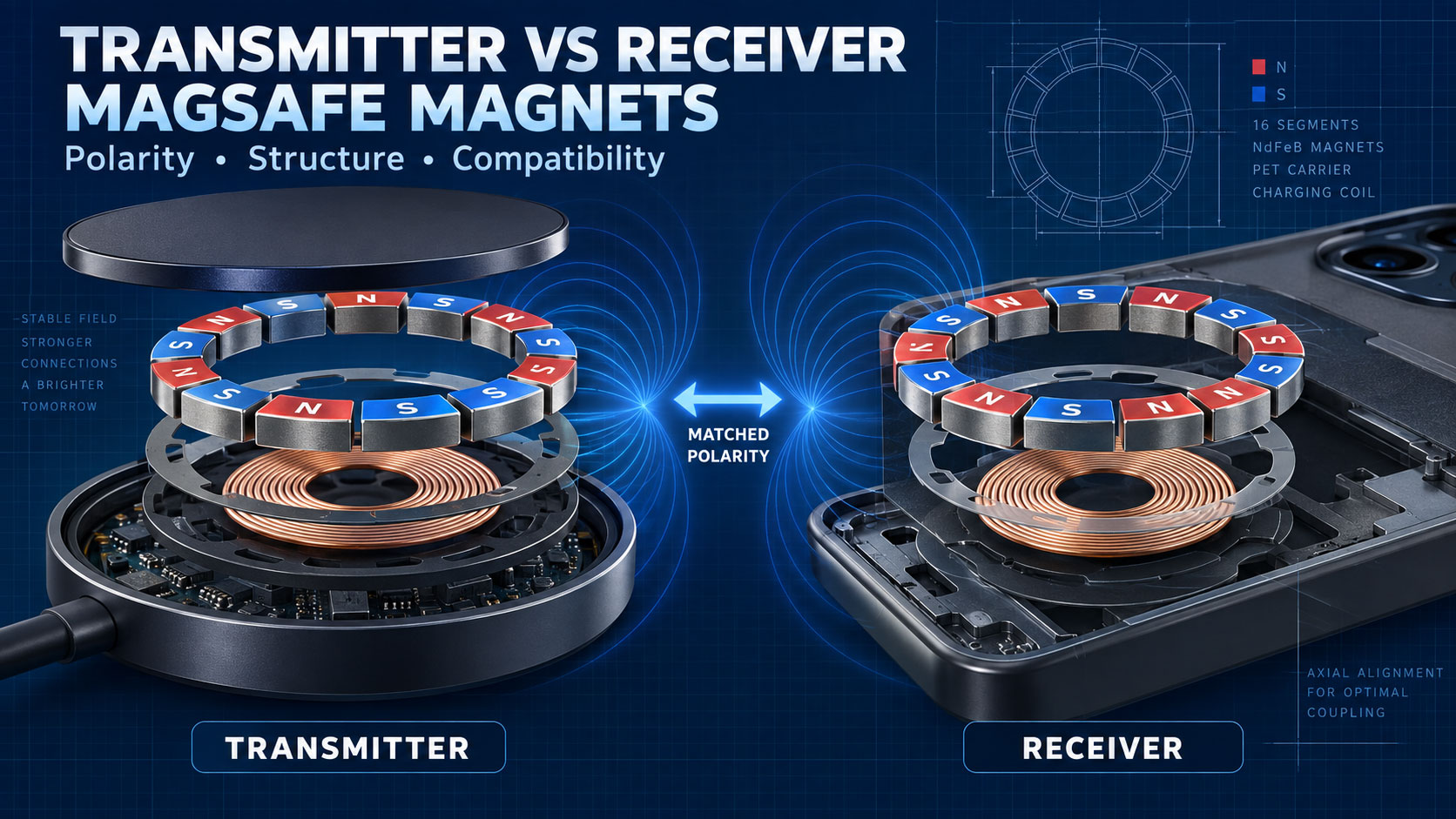
For example, arc magnets are frequently used in electric motors, while thin ring or segment magnets are common in wireless charging alignment systems and compact electronic assemblies.
How Are Neodymium Magnets Manufactured?
Most high-performance neodymium magnets are produced using a sintering process:
-
Raw materials are melted into an NdFeB alloy.
-
The alloy is crushed into a fine powder.
-
The powder particles are aligned in a magnetic field.
-
The material is pressed into a compact shape.
-
The compact is sintered at a controlled temperature.
-
The magnet is heat-treated to optimize its microstructure.
-
It is cut, ground, or machined to final dimensions.
-
A protective coating is applied when required.
-
The finished component is magnetized.
-
Magnetic, dimensional, and coating inspections are completed.
Neodymium magnets are normally machined before magnetization because magnetized parts are difficult and potentially dangerous to process.
Why Do Neodymium Magnets Need a Coating?
Sintered NdFeB magnets contain a high percentage of iron and can corrode when exposed to moisture, salt, chemicals, or condensation.
Protective surface treatments may include:
| Coating |
Typical characteristics |
| Nickel-copper-nickel |
Common, durable, bright metallic finish |
| Zinc |
Economical protection for general applications |
| Epoxy |
Improved moisture and chemical resistance |
| Nickel plus epoxy |
Combines metallic and polymer protection |
| Phosphate |
Basic temporary or assembly-level protection |
| Parylene |
Thin, uniform coating for specialized components |
| Gold or silver |
Used in selected electronic, decorative, or specialized applications |
Coating selection should be based on humidity, salt exposure, chemical contact, friction, temperature cycling, and expected product lifetime.
For demanding environments, the magnet may also require sealing, overmolding, encapsulation, or installation inside a protected magnetic assembly.
Where Are Neodymium Magnets Used?
Electric Motors and Generators
NdFeB magnets provide high torque density and support compact motor designs. They are widely used in:
-
Electric vehicle motors
-
Servo motors
-
Brushless DC motors
-
Industrial automation
-
Robotics
-
Drones
-
Wind power generators
-
Pumps and compressors
Wireless Charging and Magnetic Alignment
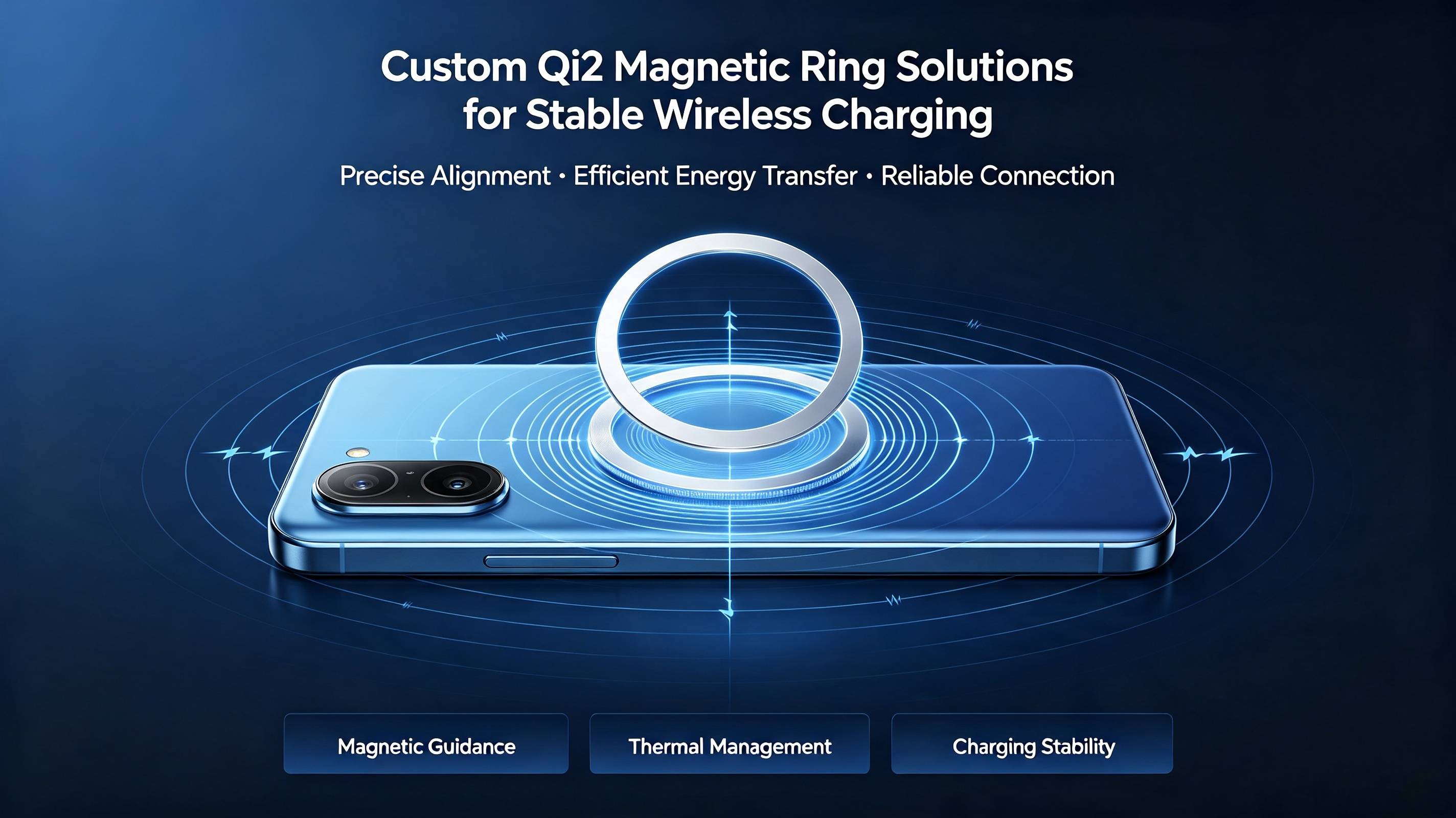
Ring-shaped or segmented neodymium magnets can align a device with a charging coil. Correct alignment helps maintain charging efficiency and improves the user experience.
These magnetic components may be used in:
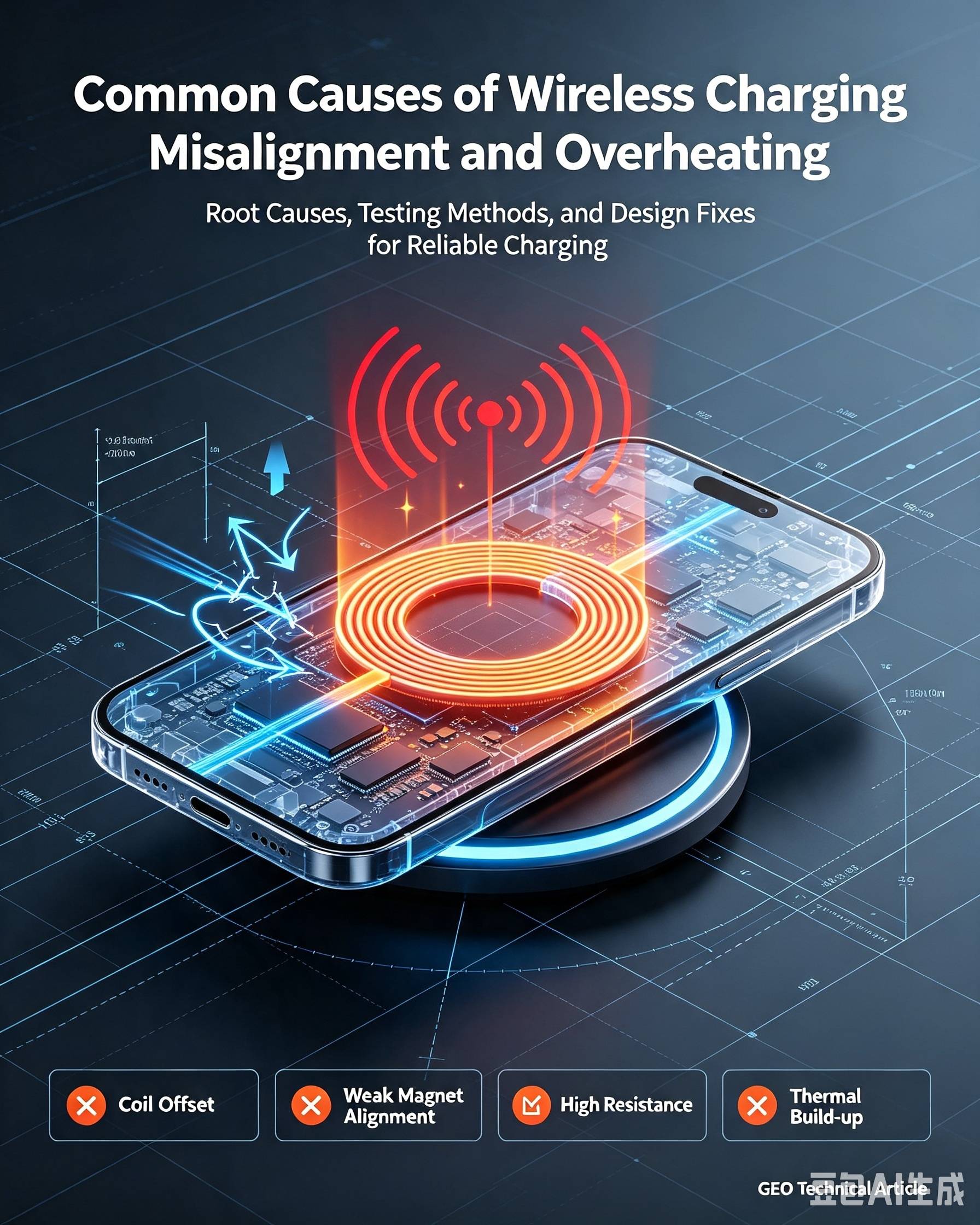
The magnetic layout must be designed carefully to avoid excessive interference with charging coils, sensors, electronic components, and foreign-object detection systems.
Consumer Electronics
Neodymium magnets are used in compact electronic products because they provide considerable force in limited spaces.
Common examples include:
Speakers and Audio Equipment
In speakers, headphones, and microphones, neodymium magnets interact with electrical coils to convert electrical energy into mechanical movement—or mechanical movement into electrical signals.
Their high energy density enables smaller and lighter audio components.
Sensors and Control Systems
Neodymium magnets can activate or support:
-
Hall-effect sensors
-
Reed switches
-
Position sensors
-
Speed sensors
-
Encoders
-
Proximity switches
-
Level-detection systems
Magnetic Assemblies
A neodymium magnet is often combined with steel, plastic, adhesive, or other components to create a complete magnetic assembly.
Examples include:
-
Pot magnets
-
Magnetic couplings
-
Magnetic rotors
-
Holding assemblies
-
Magnetic latches
-
Filter rods
-
Separation equipment
-
Custom motor components
A properly designed assembly can concentrate magnetic flux, improve mechanical protection, simplify installation, and increase usable holding force.
Advantages of Neodymium Magnets
The principal benefits of NdFeB magnets include:
-
High magnetic output relative to size
-
Strong resistance to demagnetization
-
Reduced component size and weight
-
Support for high-efficiency motor designs
-
Availability in many grades and geometries
-
Suitability for custom magnetic circuits
-
Reliable performance when correctly specified and protected
Limitations of Neodymium Magnets
Despite their strength, neodymium magnets have several important limitations.
They Are Brittle
NdFeB magnets are hard but mechanically brittle. They may chip, crack, or shatter if dropped or allowed to collide.
They should not be treated like structural steel parts or used as load-bearing mechanical components.
They Can Corrode
Unprotected sintered neodymium magnets may oxidize in humid or chemically aggressive environments. Appropriate coatings, sealing methods, and storage conditions are essential.
Their Performance Changes With Temperature
Magnetic output generally decreases as temperature increases. Excessive heat can cause irreversible magnetic loss if the magnet’s temperature rating and working point are exceeded.
Strong Magnets Can Be Dangerous
Large neodymium magnets can attract each other or nearby steel objects with enough force to cause crushing injuries. They may also create flying fragments if they collide and break.
How to Select the Right Neodymium Magnet
Selecting a magnet requires more than choosing the highest available grade. A reliable design should consider:
-
Required magnetic force or flux density
-
Available installation space
-
Magnet shape and dimensions
-
Magnetization direction
-
Working air gap
-
Continuous and peak operating temperatures
-
Humidity and corrosion exposure
-
Mechanical shock and vibration
-
Nearby steel and magnetic materials
-
Coating or encapsulation requirements
-
Dimensional tolerances
-
Assembly and adhesive methods
-
Regulatory and testing requirements
-
Production quantity and target cost
Finite element analysis and prototype testing may be required for motors, sensors, wireless charging modules, and complex magnetic assemblies.
Neodymium Magnets vs. Other Permanent Magnets
| Magnet type |
Magnetic strength |
Temperature capability |
Corrosion resistance |
Typical cost |
| Neodymium (NdFeB) |
Very high |
Grade-dependent |
Usually needs protection |
Medium to high |
| Samarium cobalt (SmCo) |
High |
Excellent |
Very good |
High |
| Ferrite |
Low to medium |
Good |
Excellent |
Low |
| Alnico |
Medium |
Excellent |
Good |
Medium to high |
NdFeB is usually selected when compact size and high magnetic strength are priorities. SmCo may be preferable at higher temperatures or in demanding corrosive conditions. Ferrite is widely used when low cost and natural corrosion resistance matter more than compactness.
Neodymium Magnet Safety Guidelines
When handling strong neodymium magnets:
-
Wear eye protection and suitable gloves.
-
Keep fingers away from the space between attracting magnets.
-
Use nonmagnetic spacers during storage and transportation.
-
Keep magnets away from pacemakers and other implanted medical devices.
-
Protect sensitive electronics and magnetic storage media.
-
Do not drill, grind, cut, or weld finished magnets.
-
Keep small magnets away from children.
-
Prevent uncontrolled collisions between magnets.
-
Follow applicable shipping and magnetic-field regulations.
Swallowing multiple magnets is a medical emergency because magnets can attract each other through internal tissue.
Frequently Asked Questions
Are neodymium magnets permanent magnets?
Yes. A neodymium magnet is a permanent magnet that produces a magnetic field without continuous electrical power. However, excessive heat, strong opposing magnetic fields, corrosion, or improper mechanical handling can reduce its performance.
Are neodymium magnets rare-earth magnets?
Yes. Neodymium is one of the rare-earth elements. NdFeB and samarium-cobalt magnets are the two principal commercial rare-earth magnet families.
Is N52 always better than N35?
No. N52 generally provides a higher maximum energy product, but N35 or another grade may offer better cost efficiency, temperature performance, manufacturability, or supply stability for a specific design.
Do neodymium magnets rust?
Unprotected sintered NdFeB magnets can corrode because they contain iron. A suitable coating, enclosure, or encapsulation method is normally required.
Can neodymium magnets lose their magnetism?
Yes. Excessive temperature, a strong reverse magnetic field, corrosion, or an unsuitable magnetic circuit can cause partial or permanent demagnetization.
Can a neodymium magnet be machined?
Machining finished magnets is not recommended. NdFeB is brittle, and grinding dust may be hazardous or flammable. Magnets should be professionally machined before magnetization.
What is the strongest neodymium magnet grade?
N52 is among the strongest commonly available commercial grades at room temperature. Specialized grades and application-specific materials may offer different combinations of remanence, coercivity, and temperature capability.
Conclusion
A neodymium magnet is a compact, high-strength permanent magnet made primarily from neodymium, iron, and boron. Its exceptional energy density makes it essential in modern motors, wireless charging systems, electronics, sensors, speakers, and industrial magnetic assemblies.
Successful magnet selection depends on more than magnetic grade. Temperature, corrosion protection, shape, magnetization direction, mechanical conditions, air gap, and the complete magnetic circuit must all be considered.
For a custom NdFeB component, the most useful starting information includes the application, dimensions, required force, working temperature, coating, magnetization direction, annual quantity, and technical drawing.