Neodymium Magnets in Everyday Life: The Hidden Technology Behind Modern Living
Neodymium magnets are hidden inside many products we use every day. They help smartphones attach to wireless chargers, turn electrical energy into sound in headphones, drive compact motors in household appliances, detect whether a door is closed, focus camera lenses, and make electric vehicles more efficient.
Although most people rarely see them, neodymium magnets have become an important part of modern life because they provide strong magnetic performance in a very small space.
What Is a Neodymium Magnet?
A neodymium magnet is a high-strength permanent magnet made mainly from an alloy of neodymium, iron, and boron. It is also known as an NdFeB magnet, neo magnet, or rare-earth magnet.
Neodymium magnets are widely used because they can:
- Produce a strong magnetic field without continuous electrical power
- Fit inside thin, lightweight products
- Improve motor efficiency
- Provide precise movement and positioning
- Create secure but removable connections
- Support sensors, speakers, charging systems, and automation
Their compact size is especially important. Without high-performance magnets, many familiar products would need to be larger, heavier, or less efficient.
Why Are Neodymium Magnets Important in Daily Life?
Neodymium magnets perform three essential functions in modern products:
- They create movement.
In motors, magnets help convert electrical energy into mechanical motion. - They enable detection and control.
In sensors, a magnet can indicate position, speed, rotation, or whether a component is open or closed. - They provide compact attraction.
Magnets can align, hold, connect, or release components without complicated mechanical fasteners.
These functions appear in consumer electronics, home appliances, transportation, healthcare, energy systems, and workplace equipment.
1. Smartphones and Magnetic Wireless Charging
One of the most visible applications of neodymium magnets is magnetic wireless charging.
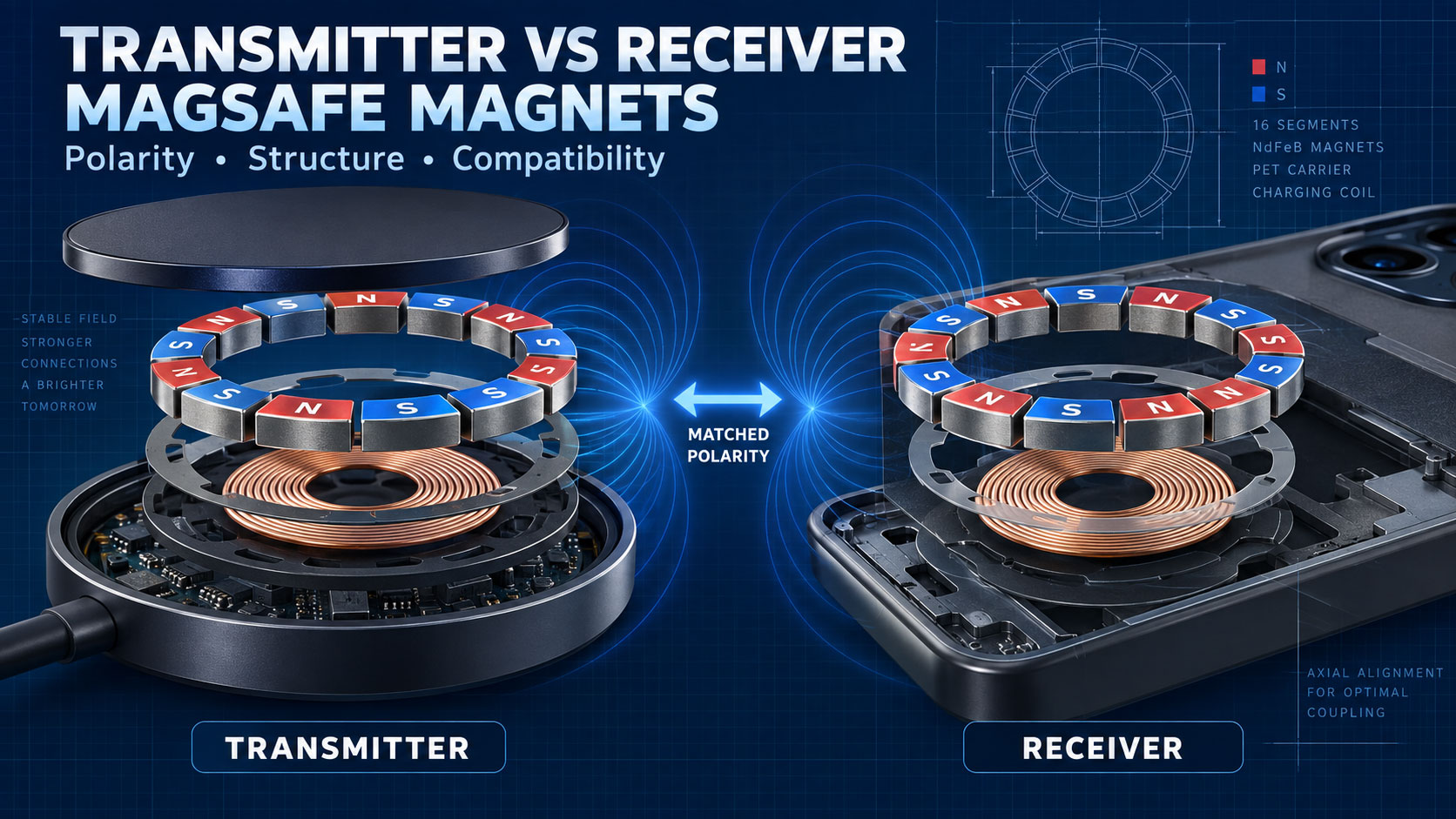
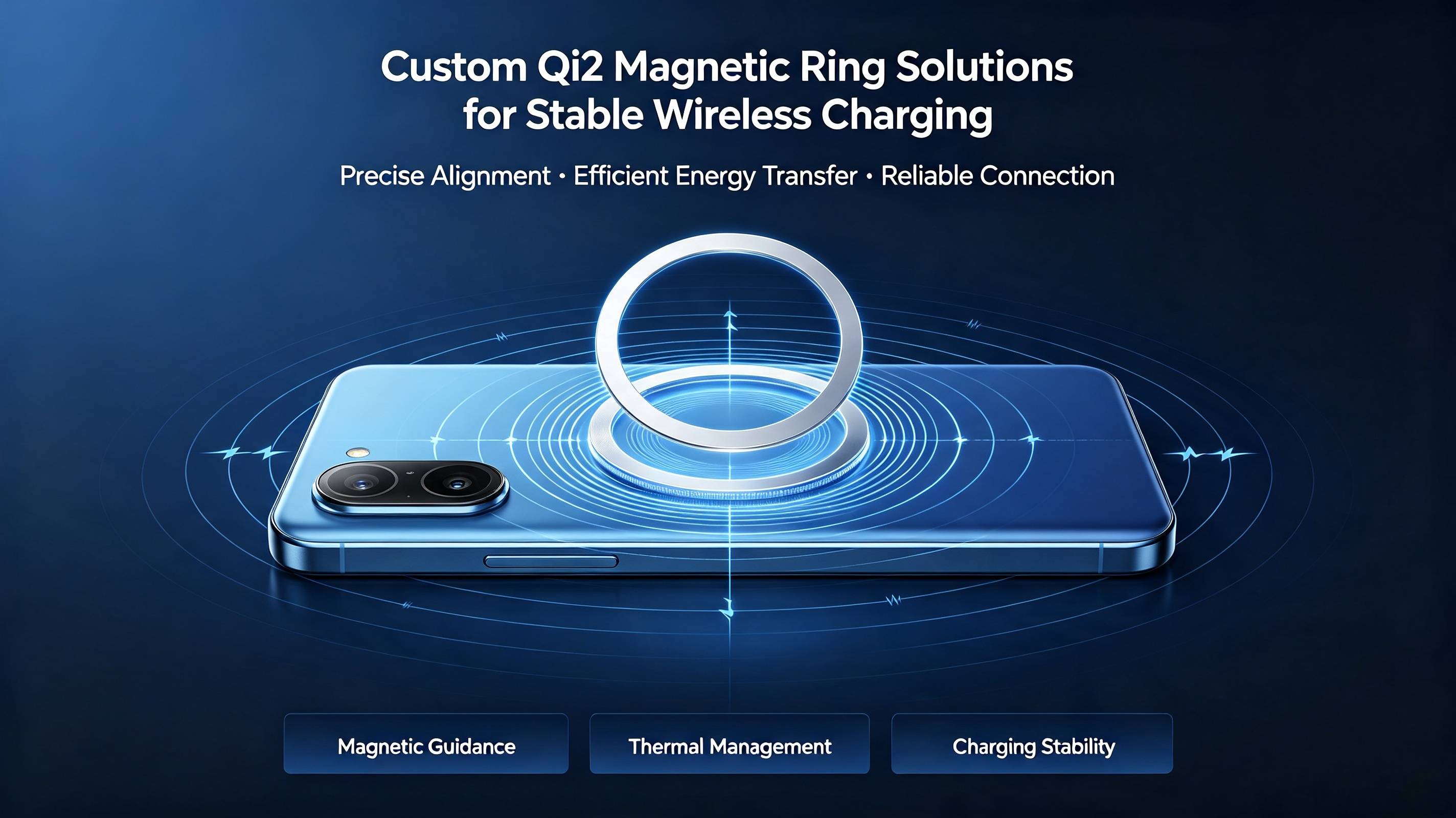
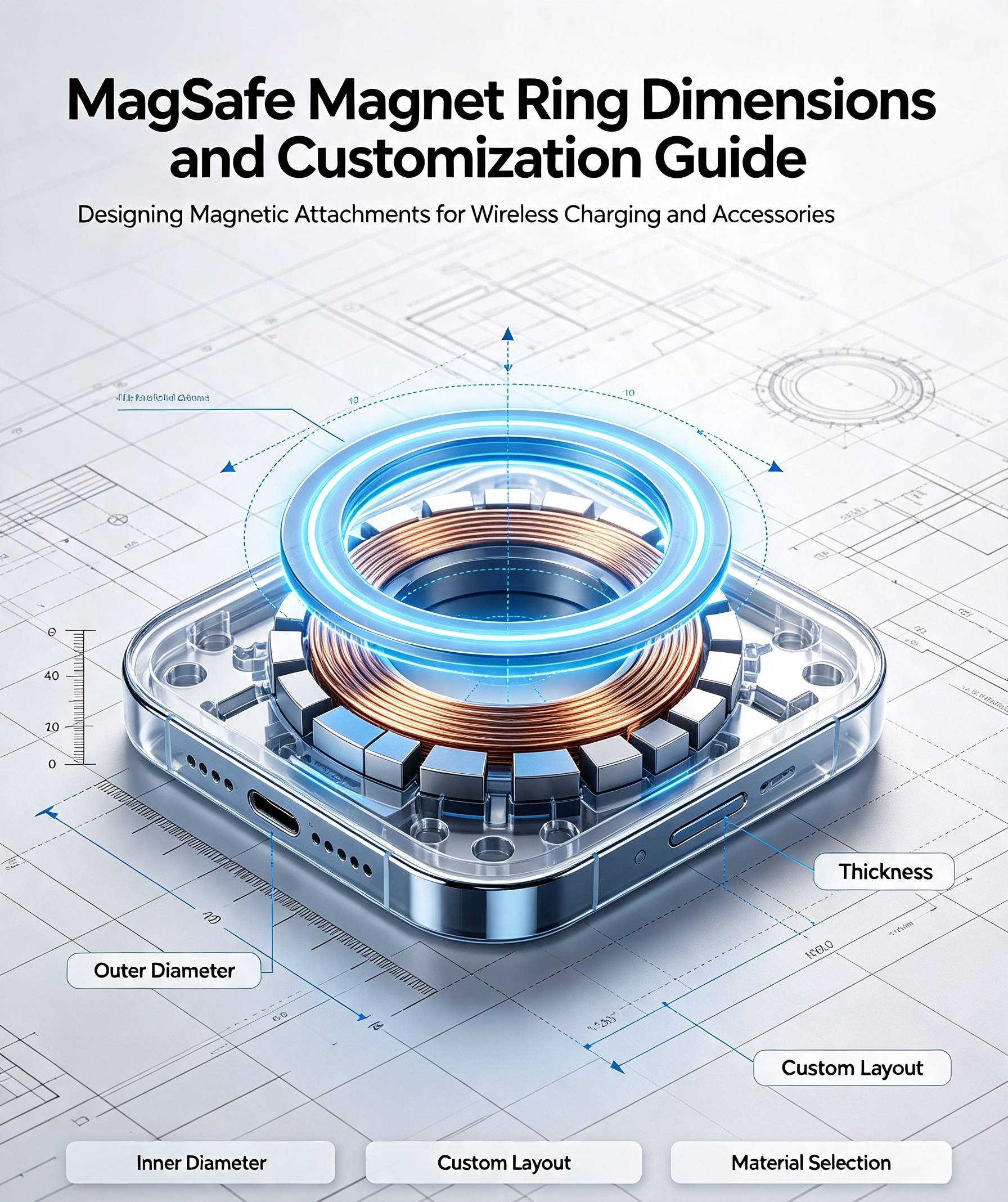
A circular magnetic assembly inside a phone or accessory helps align the device with its charging coil. Correct alignment is important because wireless charging works best when the transmitting and receiving coils are positioned properly.
Neodymium magnets may be found in:
- Magnetic wireless chargers
- Qi2-compatible charging devices
- Phone cases
- Car phone mounts
- Charging stands
- Magnetic battery packs
- Wallet attachments
- Foldable device accessories
The magnets do not generate the charging power. Instead, they provide repeatable mechanical alignment so that the charging coils remain in the correct position.
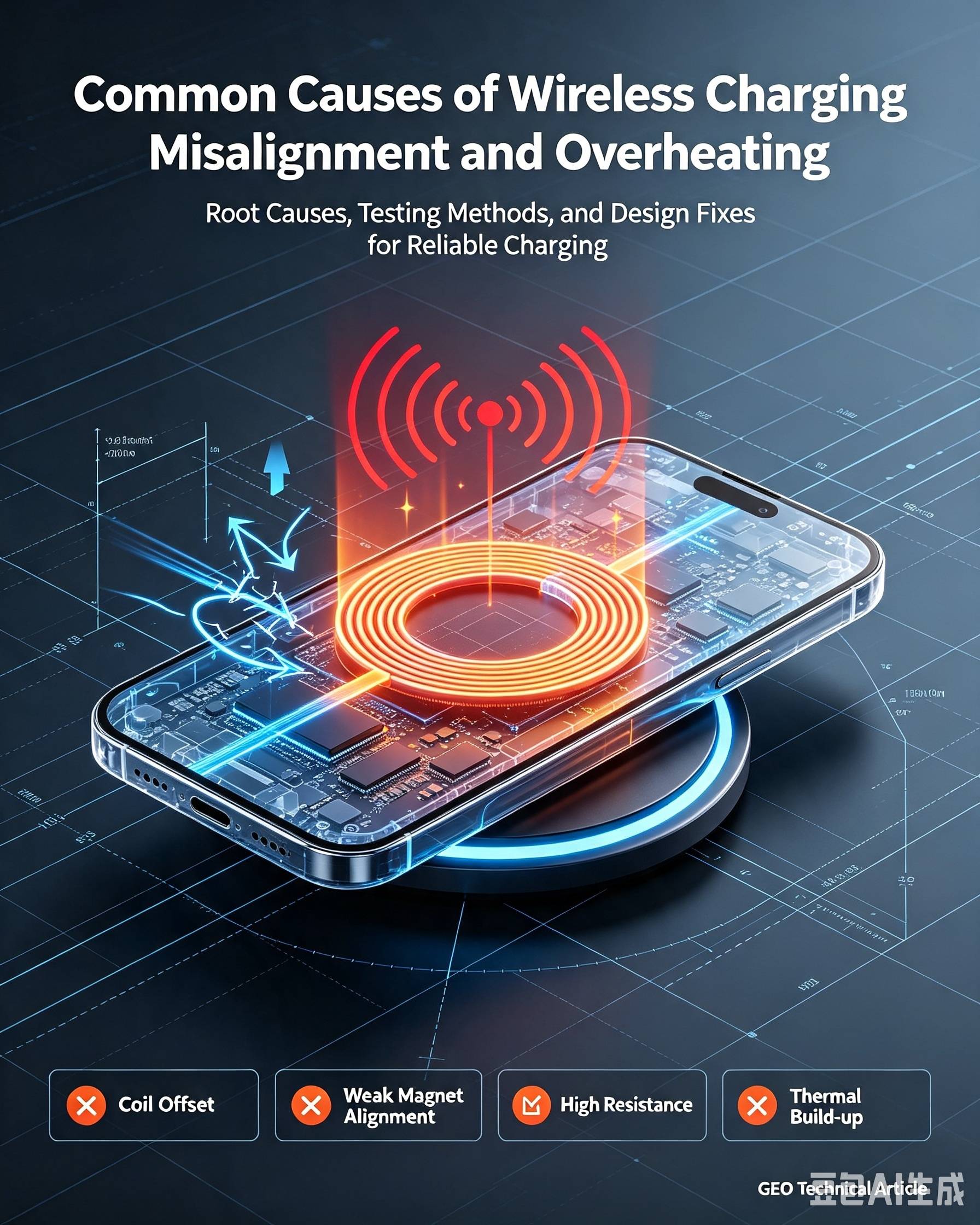
This small convenience has a larger technological value: reliable alignment can improve charging stability and reduce energy losses caused by coil misalignment.
2. Headphones, Earbuds, and Speakers
Every time you listen to music, watch a video, or answer a call, a small permanent magnet may be helping produce the sound.
Inside a speaker or headphone driver, an electrical audio signal passes through a coil. The interaction between the coil and a permanent magnetic field causes a diaphragm to move. That movement creates sound waves.
Neodymium magnets are particularly useful in:
- Wireless earbuds
- Over-ear headphones
- Smartphone speakers
- Laptop speakers
- Smart speakers
- Car audio systems
- Microphones
- Hearing devices
Because NdFeB magnets provide high magnetic strength in a compact form, manufacturers can produce smaller and lighter audio devices while maintaining useful sound output.
The same basic principle works in reverse in certain microphones: sound causes movement, and the magnetic system helps convert that movement into an electrical signal.
3. Laptops, Tablets, and Smart Covers
Neodymium magnets perform several hidden functions inside portable computers and tablets.
They may be used to:
- Hold a tablet cover closed
- Attach a keyboard accessory
- Align detachable components
- Detect when a laptop lid is closed
- Support compact speakers
- Operate small cooling fans
- Position internal connectors
- Assist camera and sensor modules
For example, a small magnet in a laptop lid may interact with a Hall-effect sensor in the main body. When the magnet approaches the sensor, the computer detects that the lid has been closed and can turn off the display or enter sleep mode.
This is a simple, reliable detection method because it requires no exposed mechanical switch.
4. Cameras and Smartphone Photography
Modern cameras depend on precise mechanical movement. Neodymium magnets can provide that movement in a compact and controllable form.
They may support:
- Autofocus mechanisms
- Optical image stabilization
- Lens positioning
- Shutter systems
- Zoom mechanisms
- Camera gimbals
- Drone camera stabilization
In a smartphone camera, tiny electromagnetic actuators can move a lens or image sensor by extremely small distances. This movement helps the camera focus and compensate for hand motion.
Without compact magnetic components, modern camera modules could become larger, slower, or less precise.
5. Electric Toothbrushes and Personal-Care Devices
An electric toothbrush turns electrical energy into rapid mechanical movement. In many designs, permanent magnets are part of the motor or actuator that creates oscillating, rotating, or sonic motion.
Neodymium magnets may also appear in:
- Electric shavers
- Hair clippers
- Facial-cleansing devices
- Massage devices
- Hair dryers
- Beauty instruments
- Small personal-care pumps
Their high magnetic energy allows the motor to remain compact while still producing useful speed and torque.
This application demonstrates an important advantage of NdFeB technology: a powerful motor does not always need to be physically large.
6. Household Appliances
Many household appliances contain small motors, pumps, sensors, speakers, or control mechanisms. Neodymium magnets can improve the size, efficiency, and responsiveness of these components.
Potential applications include:
- Washing machine motors
- Robotic vacuum cleaners
- Cordless vacuum cleaners
- Air purifiers
- Fans
- Refrigeration fans
- Dishwasher pumps
- Coffee machines
- Food processors
- Smart door locks
- Automated curtains
In a cordless vacuum cleaner, for example, a high-speed brushless motor may use permanent magnets to generate strong suction from a relatively lightweight device.
In a robotic vacuum, magnets may contribute to wheel motors, brush motors, sensors, and charging-dock alignment.
Not every magnet inside an appliance is neodymium. Flexible refrigerator door seals, for example, are generally made with flexible ferrite magnetic material rather than solid NdFeB magnets. Neodymium magnets are more likely to be used in compact motors, sensors, speakers, and specialized assemblies inside the appliance.
7. Cars and Electric Vehicles
A modern vehicle can contain many magnetic components. Neodymium magnets are especially important where compact motors, precise sensors, and high power density are required.
They may be used in:
- Electric traction motors
- Electric power steering
- Seat-adjustment motors
- Window-lifting motors
- Cooling fans
- Fuel and coolant pumps
- Audio systems
- Cameras and driver-assistance systems
- Position and speed sensors
- Door and trunk sensors
- Hybrid vehicle generators
In electric and hybrid vehicles, permanent-magnet motors can provide high torque, compact dimensions, and efficient operation. However, motor designs vary, and not every electric vehicle uses an NdFeB permanent-magnet motor.
Even in conventional vehicles, numerous small electric motors rely on permanent magnets to automate functions that were once operated manually.
8. Bicycles, E-Bikes, and Personal Mobility
Electric bicycles, scooters, hoverboards, and mobility devices often require compact motors with high torque relative to their weight.
Neodymium magnets may be used in:
- E-bike hub motors
- Electric scooter motors
- Speed sensors
- Pedal-assist sensors
- Electronic braking systems
- Wheel-position detection
A small magnet attached near a bicycle wheel can also pass a sensor once per rotation, allowing a computer to calculate speed and distance.
The magnet itself is simple, but it enables accurate measurement without complex mechanical contact.
9. Medical and Healthcare Equipment
Neodymium magnets appear in many healthcare-related products, although they must be carefully selected and controlled.
Applications may include:
- Hearing aids
- Dental devices
- Medical pumps
- Surgical instruments
- Prosthetic components
- Laboratory automation
- Positioning systems
- Rehabilitation equipment
- Medical-device motors and sensors
Hearing aids and assistive listening devices benefit from compact magnetic components because the equipment must remain small, lightweight, and energy-efficient.
Medical applications require strict attention to biocompatibility, corrosion protection, reliability, magnetic-field exposure, and applicable regulations.
People with pacemakers, implanted cardioverter defibrillators, or other implanted medical devices should keep strong magnets at a safe distance and follow the device manufacturer’s guidance.
10. Doors, Cabinets, Bags, and Furniture
Magnets can replace visible hooks, screws, latches, and mechanical locks in products that need a clean appearance or frequent opening and closing.
Neodymium magnets may be used in:
- Cabinet catches
- Concealed door latches
- Handbag closures
- Jewelry clasps
- Furniture connectors
- Detachable panels
- Shower-door fittings
- Magnetic knife holders
- Tool holders
- Retail displays
A properly designed magnetic closure can provide a quiet, repeatable, and convenient connection.
However, stronger is not always better. Excessive magnetic force may make a product difficult to open or may damage delicate materials. Designers must balance holding force, air gap, magnet size, coating, and user experience.
11. Toys, Hobbies, and Educational Products
Magnets make it possible to build products that connect, rotate, levitate, or react without conventional fasteners.
They may appear in:
- Construction toys
- Model trains
- Miniature motors
- Science demonstration kits
- Magnetic puzzles
- Detachable model parts
- Hobby generators
- Remote-control vehicles
- Board-game components
Small high-strength magnets must be handled carefully. If multiple magnets are swallowed, they can attract each other through internal tissue and cause life-threatening injuries.
For this reason, loose high-powered magnets are not suitable for young children, and magnetic consumer products must follow relevant safety requirements.
12. Tools, Workshops, and Industrial Workplaces
Neodymium magnets are also useful in everyday work environments.
Common examples include:
- Magnetic screwdriver tips
- Tool organizers
- Parts trays
- Welding holders
- Magnetic pickup tools
- Inspection equipment
- Measuring instruments
- Magnetic hooks
- Identification systems
- Work-light mounts
A magnetic pickup tool can retrieve a dropped screw from a narrow space. A magnetic tray prevents small metal components from rolling away. A removable magnetic mount allows a light or sensor to be repositioned without drilling holes.
These applications may seem simple, but they save time and improve workplace organization.
13. Renewable Energy and Energy-Efficient Technology
Neodymium magnets support technologies that generate or conserve energy.
They may be found in:
- Wind turbine generators
- High-efficiency electric motors
- Energy-recovery systems
- Compact generators
- Smart-home ventilation systems
- Heat pumps and compressors
- Automated energy controls
In a permanent-magnet generator, mechanical rotation is converted into electrical energy through electromagnetic induction.
The importance of neodymium magnets therefore extends beyond personal convenience. They can also contribute to electrification, automation, renewable energy, and improved energy efficiency.
A Day Powered by Hidden Magnets
The role of magnets becomes clearer when we follow an ordinary day.
In the morning, an electric toothbrush uses a compact motor. A smartphone disconnects from a magnetic charger. Earbuds convert electrical signals into sound during the commute.
A car uses motors and sensors to control windows, seats, speakers, pumps, and steering systems. At work, a laptop detects when its lid is closed, while its speakers and cooling system rely on compact electromagnetic components.
At home, a cordless vacuum, robotic cleaner, air purifier, camera, smart speaker, and kitchen appliance may all contain permanent magnets.
The user rarely sees these magnets, but the products depend on them for movement, alignment, sensing, sound, and efficient operation.
Why Not Use an Ordinary Magnet?
Ferrite, alnico, and samarium-cobalt magnets are also important permanent-magnet materials. Each has its own advantages.
| Magnet type | Main advantage | Common limitation |
|---|---|---|
| Neodymium (NdFeB) | Very high strength in a compact size | Requires protection from heat and corrosion |
| Ferrite | Low cost and good corrosion resistance | Lower magnetic strength |
| Samarium cobalt | Excellent high-temperature performance | Higher material cost |
| Alnico | Good temperature stability | Lower resistance to demagnetization in some circuits |
Neodymium magnets are often selected when a product requires high force, low weight, limited space, or a compact high-performance motor.
Ferrite may be more appropriate when cost and natural corrosion resistance are more important than size. Samarium cobalt may be selected for demanding high-temperature environments.
The Limitations Behind Their Strength
Despite their performance, neodymium magnets require careful engineering.
Corrosion
Sintered NdFeB magnets contain iron and can corrode in humid or chemically aggressive conditions. Nickel, zinc, epoxy, parylene, or other protective coatings may be required.
Temperature
Magnetic performance decreases as temperature rises. Excessive heat can cause irreversible demagnetization if the selected grade is unsuitable.
Brittleness
Neodymium magnets are hard but brittle. They may chip or break if dropped or allowed to collide.
Magnetic Interference
Strong magnetic fields may affect sensors, medical implants, magnetic cards, compasses, and sensitive equipment.
Handling Risk
Large magnets can attract one another with enough force to crush fingers or create flying fragments.
How Engineers Choose a Magnet for an Everyday Product
Selecting the highest magnetic grade is not always the correct approach. Engineers evaluate:
- Required magnetic force
- Available installation space
- Operating temperature
- Humidity and corrosion exposure
- Magnet shape and dimensions
- Magnetization direction
- Distance between magnetic components
- Mechanical shock and vibration
- Coating requirements
- Nearby sensors and electronics
- Product lifetime
- Assembly method
- Manufacturing cost
- Regulatory requirements
The magnet must be designed as part of the complete product rather than treated as an isolated component.
Frequently Asked Questions
Where are neodymium magnets found in everyday life?
Neodymium magnets are commonly found in smartphones, magnetic chargers, headphones, speakers, laptops, cameras, electric toothbrushes, cordless appliances, automotive motors, sensors, tools, and magnetic closures.
Why are neodymium magnets used in electronics?
They provide strong magnetic performance in a small space. This helps manufacturers create thinner speakers, smaller motors, compact sensors, and lightweight portable devices.
Do neodymium magnets power wireless charging?
No. They do not produce the charging energy. Their primary role is to align and hold the transmitting and receiving coils in the correct position.
Are all household magnets made from neodymium?
No. Household products may use neodymium, ferrite, alnico, or other magnetic materials. Refrigerator door seals, for example, generally use flexible ferrite material.
Can neodymium magnets lose their strength?
Yes. Excessive heat, corrosion, a strong opposing magnetic field, or an unsuitable magnetic circuit can cause partial or permanent loss of magnetism.
Are neodymium magnets safe?
They are generally safe when properly enclosed and used as designed. Loose or large magnets require precautions because they can pinch fingers, shatter during collisions, interfere with medical devices, or cause severe injury if swallowed.
What makes neodymium magnets different from regular magnets?
Their main advantage is their exceptionally high magnetic energy relative to their size. A small neodymium magnet can often provide more magnetic force than a much larger ferrite magnet.
Conclusion
Neodymium magnets are an invisible but essential part of modern life. They help our devices produce sound, our cameras focus, our chargers align, our appliances move, our vehicles operate efficiently, and our sensors understand position and motion.
Their importance does not come from being visible. It comes from enabling products to become smaller, lighter, more precise, more convenient, and more energy-efficient.
The next time a phone snaps into place on a charger, a laptop detects a closed lid, a speaker plays music, or an electric motor quietly starts, a hidden neodymium magnet may be working inside.