N52 vs N52H Magnets for Wireless Charging: Which Grade Should You Choose?
Wireless charging products require magnets that are small, strong, stable, and resistant to heat. N52 and N52H are two high-performance neodymium magnet grades commonly considered for magnetic charging rings, phone cases, power banks, car chargers, and charging stands.
Although their names are similar, they are designed for different working conditions. N52 provides very high magnetic strength at normal temperatures, while N52H provides better resistance to high-temperature demagnetization.
Quick Answer: N52 or N52H?
Choose N52 when:
- Maximum magnetic strength is the main priority
- The operating temperature is relatively low
- The product has good thermal management
- Cost control is important
Choose N52H when:
- The magnet may be exposed to higher temperatures
- The product combines wireless charging with fast charging
- The magnet is close to charging coils, batteries, or electronic components
- Long-term magnetic stability is more important than the lowest cost
For many wireless charging products, N52H can provide a larger safety margin against heat-related demagnetization. However, the correct grade must be selected according to the actual temperature, air gap, dimensions, magnetic circuit, and holding-force requirements.
What Does N52 Mean?
N52 is a high-energy sintered neodymium-iron-boron magnet grade.
The letter N identifies a standard-temperature NdFeB grade. The number 52 is related to its maximum energy product, normally expressed in MGOe.
N52 magnets provide:
- Very high magnetic output
- Strong holding force in a small size
- Compact product design
- Good performance at normal temperatures
- Wide use in consumer electronics
N52 is suitable when a wireless charging product requires strong attraction but does not expose the magnet to excessive heat.
What Does N52H Mean?
N52H is also a high-energy NdFeB magnet, but the letter H indicates higher intrinsic coercivity.
Intrinsic coercivity measures the magnet’s ability to resist permanent demagnetization. A higher-coercivity magnet is generally more stable when exposed to elevated temperatures or an opposing magnetic field.
N52H magnets usually offer:
- High magnetic strength
- Better thermal stability than standard N52
- Greater resistance to irreversible demagnetization
- Improved reliability in demanding electronic applications
The maximum recommended operating temperature is commonly around 80°C for N52 and 120°C for N52H, but these values are not universal guarantees. Actual temperature capability depends on the manufacturer’s material specification, magnet shape, magnetic circuit, coating, and working conditions.
Always confirm the technical datasheet before final grade selection.
N52 vs N52H: Main Differences
| Factor | N52 | N52H |
|---|---|---|
| Magnet type | High-energy NdFeB | High-energy, high-coercivity NdFeB |
| Magnetic strength | Very high | Very high |
| Heat resistance | Standard | Higher |
| Demagnetization resistance | Good under normal conditions | Better at elevated temperatures |
| Typical operating-temperature category | Up to approximately 80°C | Up to approximately 120°C |
| Cost | Generally lower | Generally higher |
| Best suited for | Normal-temperature products | Products with greater thermal risk |
The exact magnetic values should be taken from the supplier’s datasheet because grade specifications may vary between manufacturers and standards.
Why Does Temperature Matter in Wireless Charging?
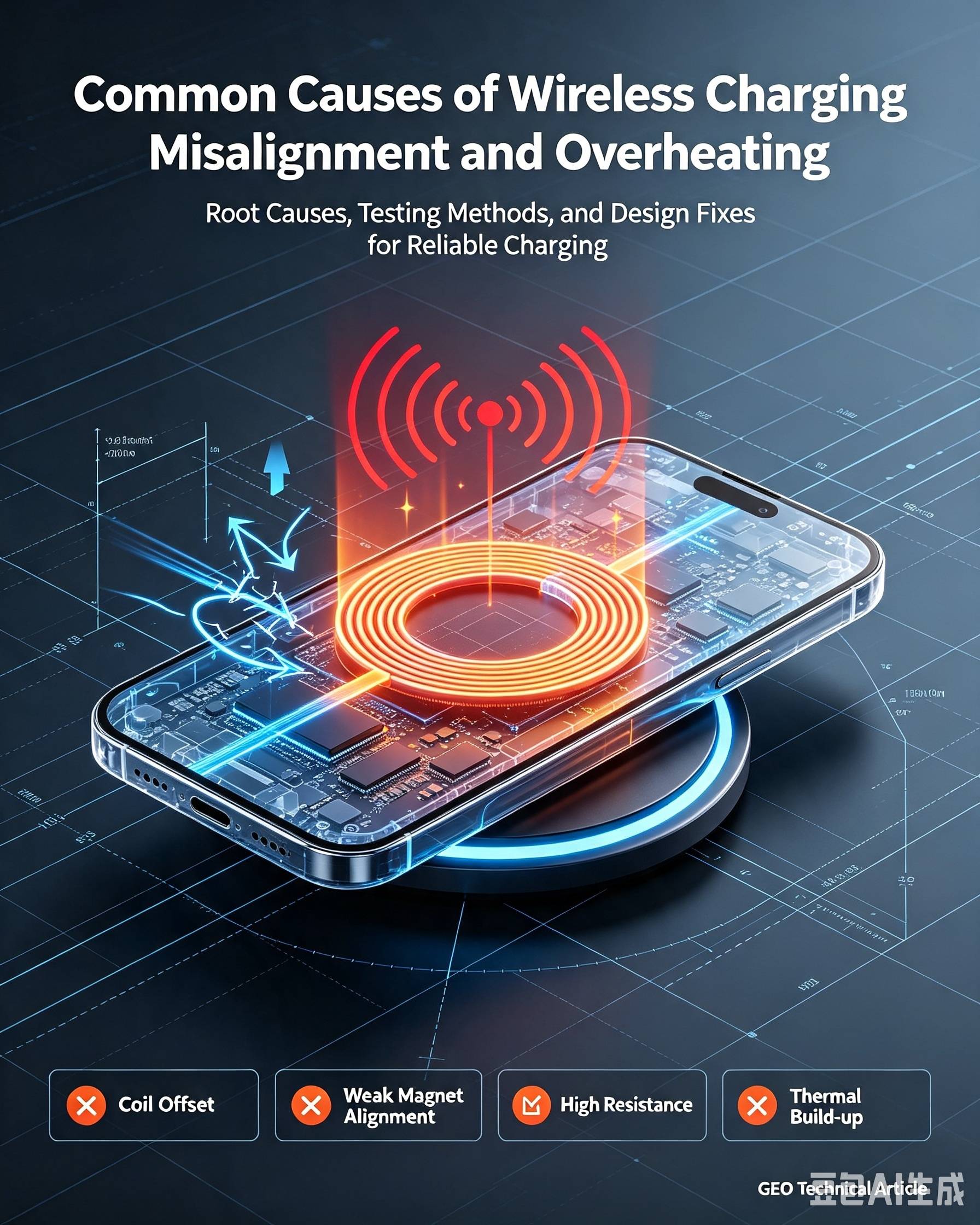
Wireless charging systems generate heat through electrical resistance, power-conversion losses, coil misalignment, foreign objects, and battery charging.
The magnet ring does not generate charging power, but it is installed close to components that may become warm, including:
- Transmitting coils
- Receiving coils
- Batteries
- Circuit boards
- Shielding materials
- Power-control components
If an N52 magnet operates above its safe temperature under an unsuitable magnetic load, it may lose part of its magnetic performance permanently.
Possible consequences include:
- Reduced holding force
- Poor phone alignment
- Unstable accessory attachment
- Increased risk of charging misalignment
- Inconsistent performance after repeated heating cycles
N52H provides greater resistance to this type of irreversible magnetic loss.
Does N52H Always Produce Stronger Attraction?
No. The “H” does not mean that the magnet has greater surface force than N52.
It means that the magnet has higher resistance to demagnetization, especially under more demanding temperature conditions.
At room temperature, N52 and N52H can provide similar magnetic performance when their dimensions and magnetic circuits are comparable. The actual holding force depends on:
- Magnet dimensions
- Segment quantity
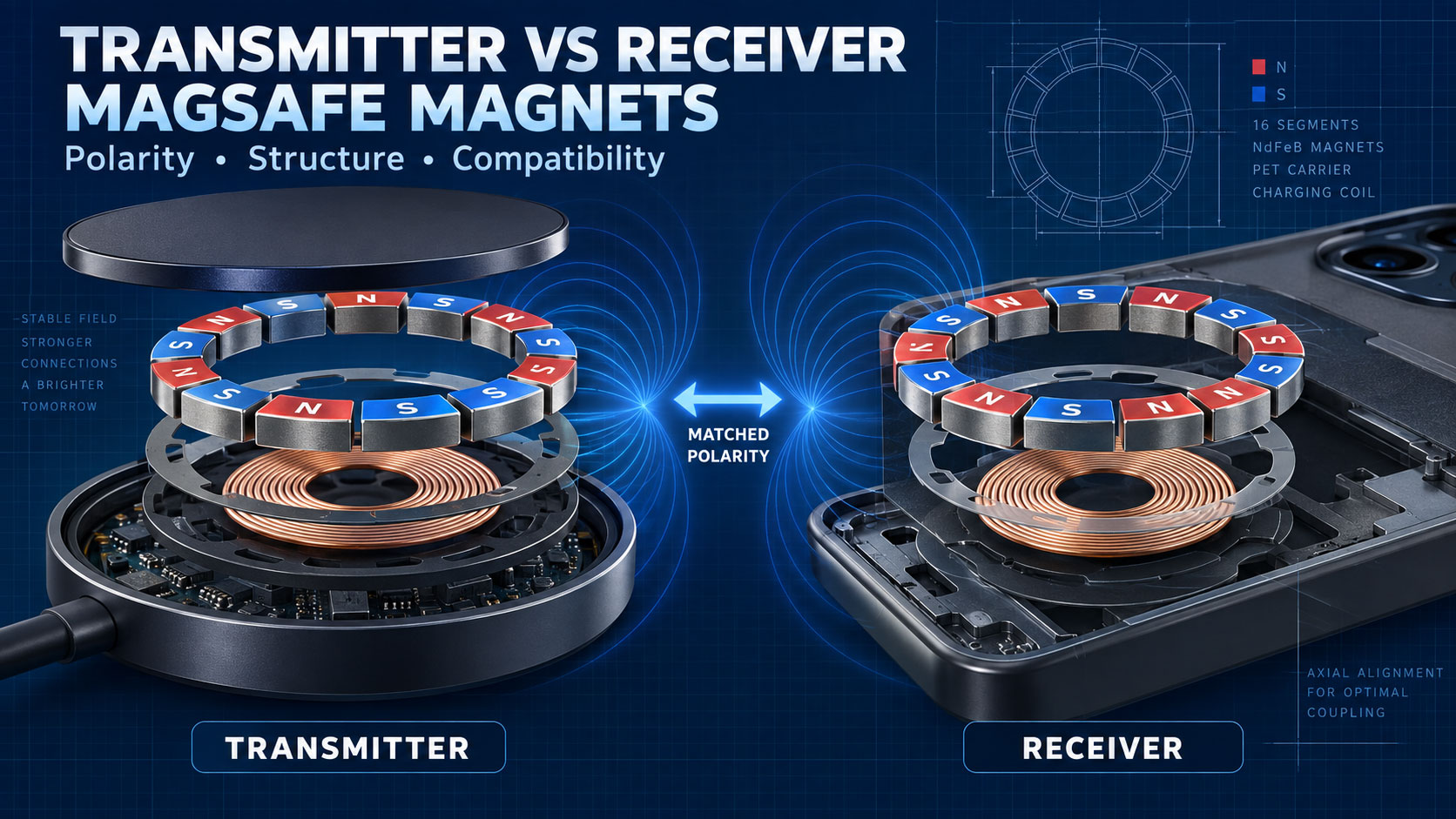
- Pole arrangement
- Air gap
- Phone-case thickness
- Carrier material
- Mating magnetic structure
- Magnetization quality
- Assembly accuracy
A correctly designed N52 ring may provide stronger attraction than a poorly designed N52H ring.
Which Grade Is Better for Wireless Charging?
Choose N52 for:
- Magnetic phone cases
- Standard charging stands
- Low-power magnetic accessories
- Products with good heat dissipation
- Applications where the magnet remains well below its temperature limit
- Cost-sensitive products with verified operating conditions
Choose N52H for:
- Fast wireless charging products
- Magnetic power banks
- Car wireless chargers exposed to sunlight
- Compact products with limited heat dissipation
- Products close to batteries or power electronics
- Applications requiring repeated thermal cycling
- Premium products requiring a larger reliability margin
N52H is not automatically necessary for every wireless charging product. Testing should determine whether its higher temperature resistance provides meaningful value.
Five Factors to Check Before Choosing
1. Maximum Product Temperature
Measure the magnet’s actual temperature during charging, not only the external housing temperature.
Test under conditions such as:
- Maximum charging power
- High ambient temperature
- Long charging duration
- Thick phone cases
- Misaligned placement
- Repeated charging cycles
2. Required Holding Force
The ring should hold the phone securely but still allow comfortable removal. Stronger is not always better.
3. Working Air Gap
Plastic housings, adhesives, covers, and phone cases increase the distance between magnetic components. Magnetic force decreases rapidly as this distance increases.
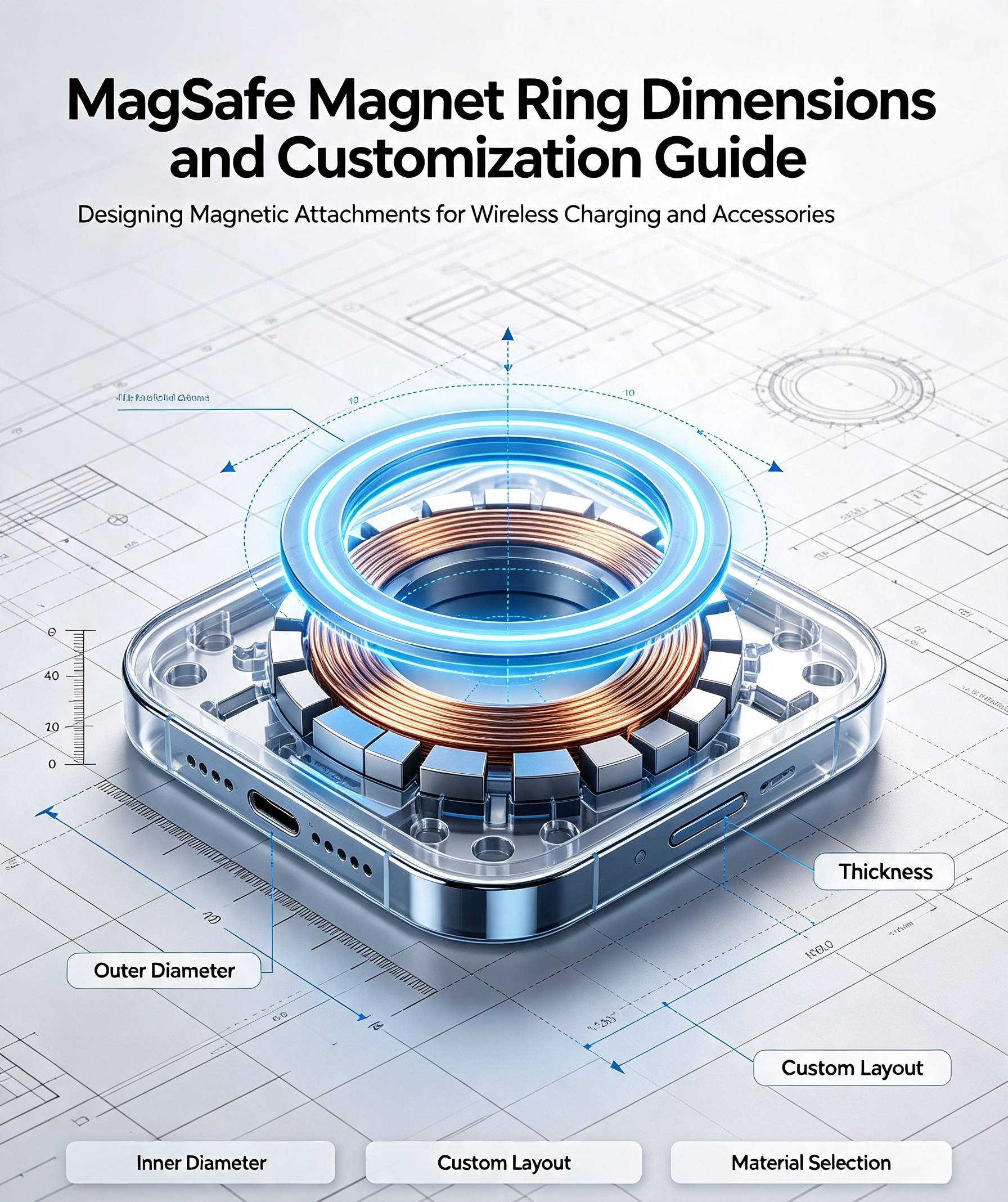
4. Ring Dimensions and Pole Arrangement
Magnet thickness, segment quantity, polarity, spacing, and assembly accuracy can be as important as the material grade.
5. Coating and Corrosion Protection
Both N52 and N52H are NdFeB materials that may corrode without suitable protection. Nickel, epoxy, or other coatings should be selected according to the environment and assembly method.
Important Note About Wireless Charging Efficiency
Changing from N52 to N52H does not automatically increase charging speed or efficiency.
Charging performance also depends on:
- Coil design
- Coil alignment
- Air gap
- Shielding material
- Control electronics
- Input power
- Thermal management
- Communication protocol
- Foreign-object detection
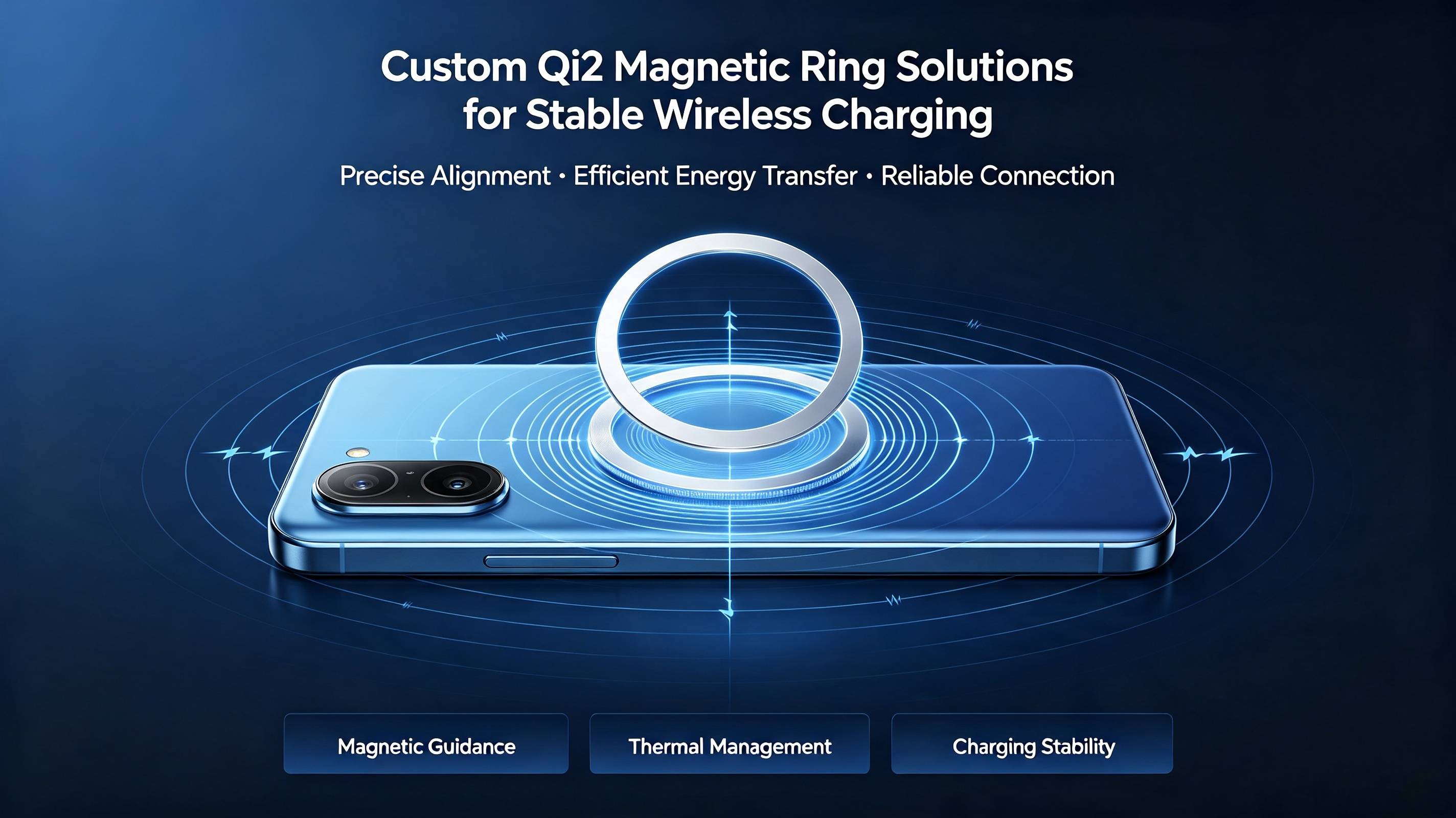
The magnetic ring mainly provides alignment and mechanical attachment. The complete charging system must be tested as one integrated product.
Frequently Asked Questions
Is N52H stronger than N52?
Not necessarily. N52H mainly offers higher intrinsic coercivity and better resistance to high-temperature demagnetization. Their room-temperature holding force may be similar when the dimensions and magnetic circuit are the same.
Can N52 magnets be used for wireless charging?
Yes. N52 magnets can be used when the actual operating temperature remains within a safe range and the complete magnetic system has been properly tested.
Is N52H better for fast wireless charging?
N52H may be more suitable because fast charging can create greater thermal stress. However, the final choice should be based on measured magnet temperature and system testing.
Does N52H improve charging speed?
No. It mainly improves magnetic stability at elevated temperatures. Charging speed depends on the complete electronic and thermal design.
Can N52 and N52H magnets use the same coating?
Yes. Both can use coatings such as nickel-copper-nickel or epoxy. The correct coating depends on humidity, temperature, adhesive compatibility, and product lifetime.
What information should I provide to a magnet supplier?
Provide the product application, ring dimensions, target holding force, working air gap, pole arrangement, maximum temperature, coating, annual volume, and product drawing.
Conclusion
N52 and N52H are both high-performance neodymium magnet grades suitable for wireless charging applications.
N52 is a good choice for strong magnetic attraction under controlled temperatures. N52H is better when the product requires additional resistance to heat and irreversible demagnetization.
The best grade cannot be selected by name alone. Magnet dimensions, pole arrangement, working air gap, charging temperature, coating, and complete product structure must also be evaluated.
A professional magnet supplier should test the magnetic ring under actual operating conditions and recommend the grade that balances strength, temperature stability, cost, and long-term reliability.
About AIM Magnet
AIM Magnet develops custom neodymium magnets and magnetic assemblies for wireless charging, consumer electronics, motors, and precision applications.
We provide support for:
- N52 and N52H grade selection
- Custom magnetic ring dimensions
- Pole-arrangement design
- Holding-force adjustment
- Coating and adhesive selection
- Sample testing
- Mass-production quality control
Send us your product drawing, operating temperature, working air gap, target holding force, and estimated order quantity for a magnetic solution evaluation.