How to Choose a MagSafe Magnet Ring Supplier
A reliable MagSafe magnet ring supplier should provide more than a strong magnet. The supplier must understand magnetic alignment, product structure, magnet strength, size, coating, adhesive, and mass-production quality.
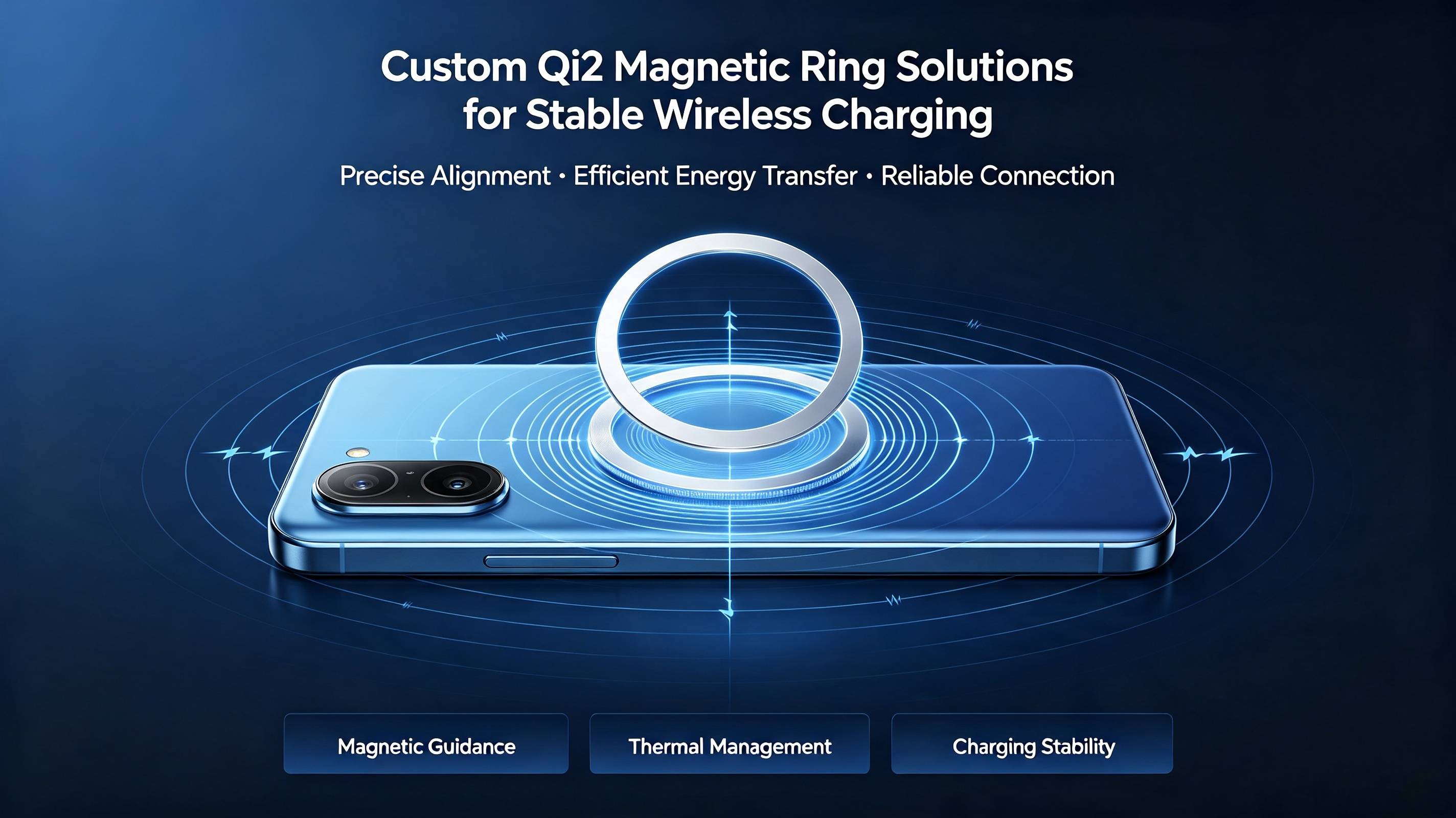
The right magnetic ring helps a phone or accessory connect smoothly, stay securely attached, and align correctly with the wireless charging coil.
What Is a MagSafe Magnet Ring?
A MagSafe magnet ring is a circular magnetic component used in:
- Magnetic phone cases
- Wireless chargers
- Magnetic power banks
- Car phone mounts
- Charging stands
- Phone holders
- Other magnetic accessories
Most high-performance magnetic rings use neodymium magnets, also called NdFeB magnets. These magnets provide strong attraction while remaining small and lightweight.
The magnet ring does not create charging power. Its main purpose is to align and hold the phone or accessory in the correct position.
Why Is the Supplier Important?
A poor-quality magnet ring may cause:
- Weak magnetic attraction
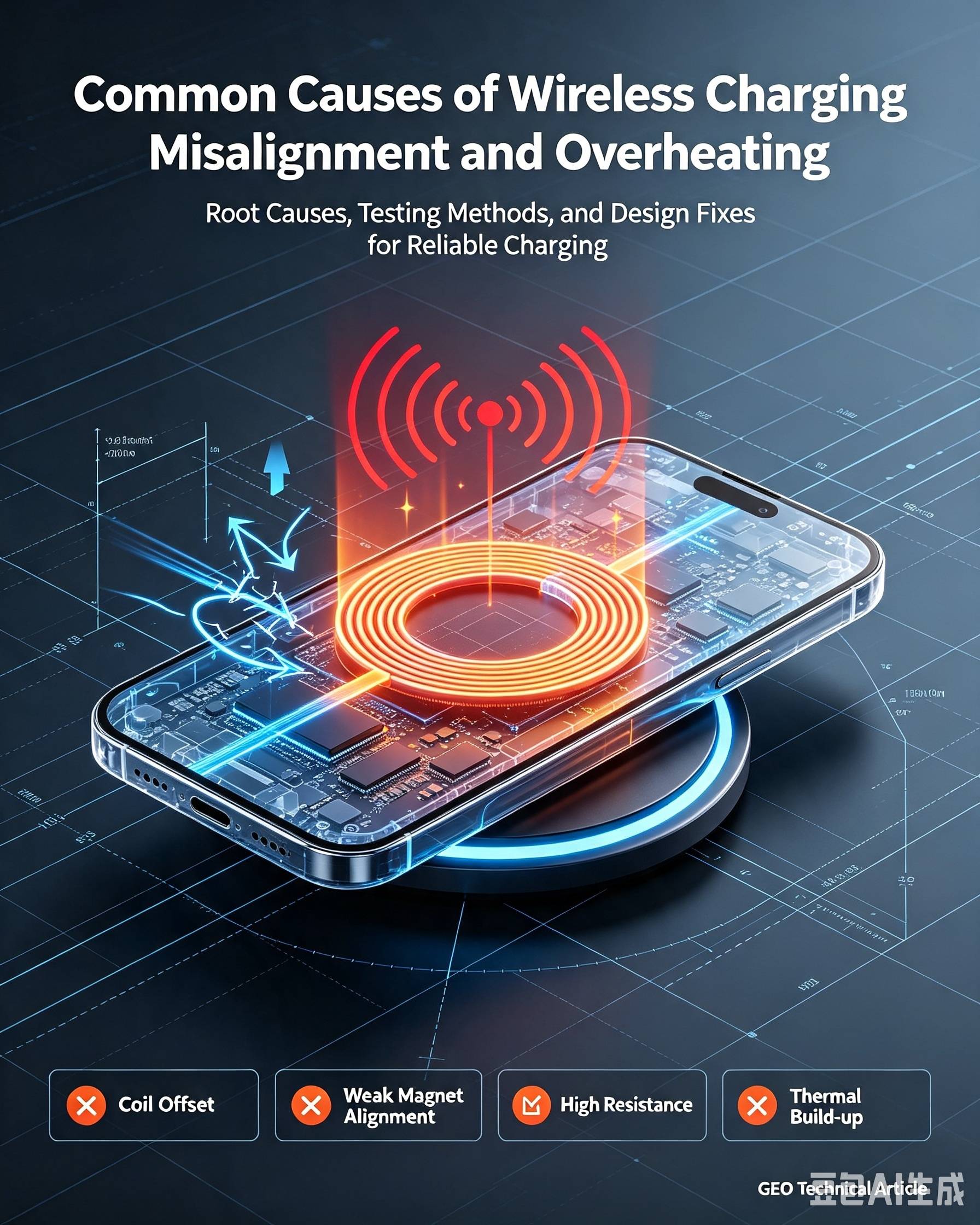
- Incorrect phone alignment
- Unstable wireless charging
- Difficult product assembly
- Magnets falling out
- Coating damage or corrosion
- Different magnetic strength between production batches
A professional supplier can help you select the correct magnet strength, size, pole arrangement, coating, and adhesive for your product.
1. Check the Supplier’s Product Experience
Choose a supplier with experience in wireless charging magnets and consumer electronics.
The supplier should understand products such as:
- Magnetic wireless chargers
- Phone cases
- Power banks
- Car mounts
- Desktop charging stands
- Qi2-related magnetic accessories
An experienced supplier can identify potential problems before mass production begins.
2. Confirm the Magnet Material
Most magnetic charging rings use neodymium magnets because they provide strong magnetic performance in limited space.
Ask the supplier to confirm:
- Magnet material
- NdFeB grade
- Operating temperature
- Surface coating
- Magnetic strength
A higher magnet grade is not always better. The correct grade depends on the product structure, working distance, temperature, and required holding force.
The supplier should recommend a suitable material rather than automatically offering the strongest and most expensive magnet.
3. Choose the Correct Magnetic Strength
A magnet ring must be strong enough to hold the phone securely, but it should not be so strong that the user cannot remove the device comfortably.
The actual magnetic force can be affected by:
- Magnet thickness
- Phone-case thickness
- Plastic housing
- Distance between magnets
- Magnet grade
- Pole arrangement
- Product weight
Ask the supplier to test the magnetic ring inside the actual product or at the real working distance.
Testing only a bare magnet against a steel plate may not show how the finished product will perform.
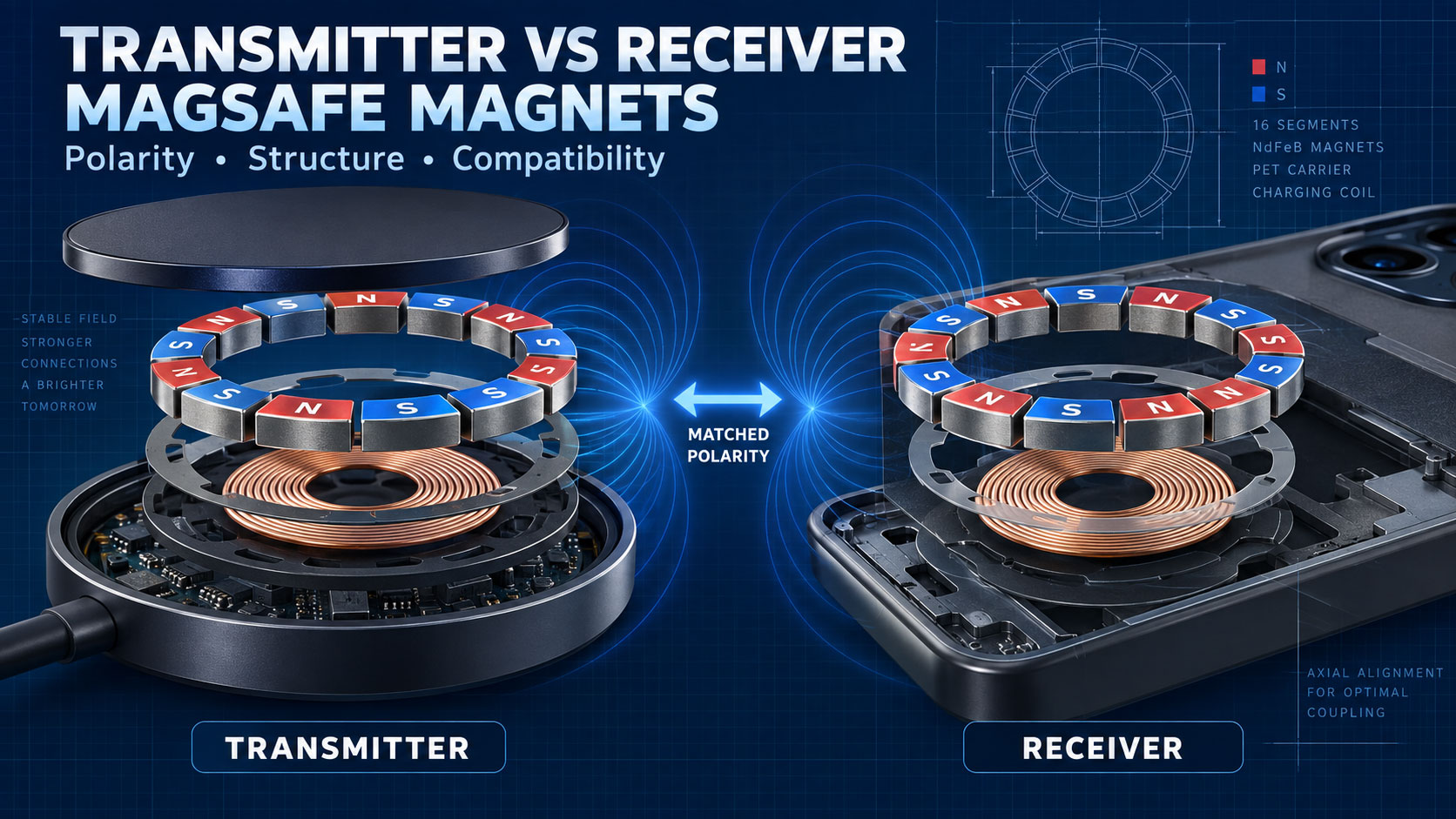
4. Check the Polarity and Magnet Arrangement
A magnetic ring contains several small magnet segments arranged in a circle. These magnets must be installed in the correct direction.
Incorrect polarity may cause:
- Weak attraction
- Uneven magnetic force
- Repulsion
- Incorrect accessory positioning
- Poor compatibility
Ask the supplier to provide a polarity drawing before production. The supplier should also inspect every ring to prevent magnets from being installed in the wrong direction.
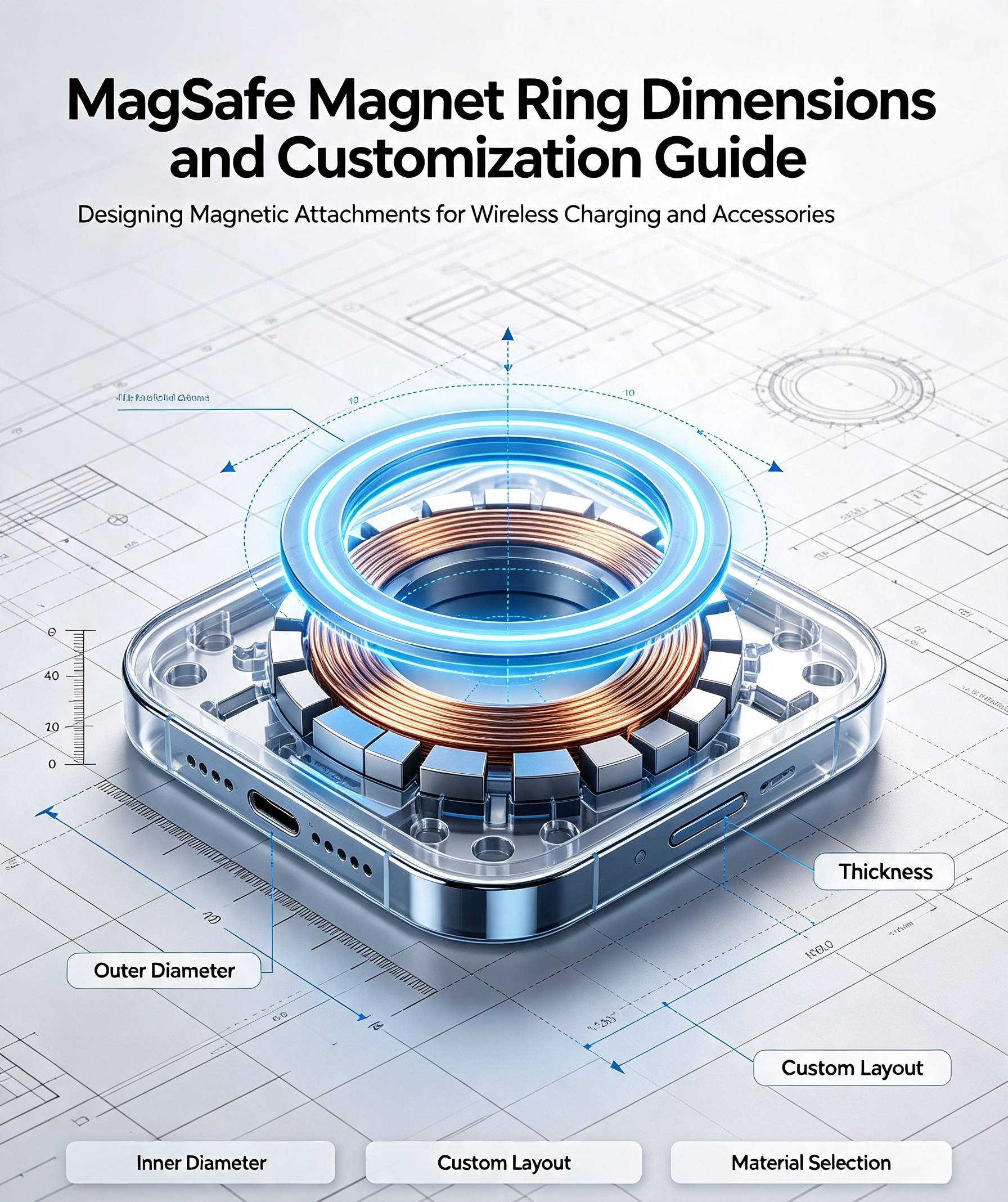
5. Confirm the Dimensions
Magnetic charging products usually have limited internal space. Even a small dimensional error may affect assembly or charging alignment.
Important dimensions include:
- Outer diameter
- Inner diameter
- Magnet thickness
- Total ring thickness
- Segment position
- Adhesive thickness
Provide a product drawing whenever possible. The supplier should confirm the dimensions and tolerances before producing samples.
6. Check the Coating and Adhesive
Neodymium magnets can corrode when exposed to moisture. A protective coating is therefore important.
Common coatings include:
- Nickel
- Zinc
- Epoxy
- Nickel plus epoxy
If the magnetic ring uses adhesive, confirm that it is suitable for your product material, such as:
- ABS
- Polycarbonate
- Glass
- Metal
- Painted surfaces
Poor adhesive may cause the magnet ring to move or separate after repeated use or exposure to heat.
7. Request Samples Before Mass Production
Always test samples before placing a large order.
Sample testing should include:
- Magnetic holding force
- Phone alignment
- Charging stability
- Ease of removal
- Product assembly
- Drop resistance
- High-temperature performance
- Adhesive strength
Testing the ring inside the finished product is more useful than testing the magnet alone.
If there is a problem, the supplier should help adjust the size, grade, thickness, magnetic force, or pole arrangement.
8. Review Quality Control
A reliable supplier should inspect every production batch.
Quality checks may include:
- Dimensions
- Appearance
- Magnetic strength
- Pole direction
- Magnet position
- Coating condition
- Adhesive position
- Packaging
Ask whether the supplier can provide an inspection report with the shipment.
Stable quality is especially important for repeat orders. A successful sample is not enough if mass-produced rings have different magnetic strength or dimensions.
9. Ask About Customization
A standard magnetic ring may not fit every product. Choose a supplier that can provide customization.
Custom options may include:
- Different diameters
- Different thicknesses
- Customized magnetic strength
- Different magnet grades
- Special pole arrangements
- Additional orientation magnets
- Custom coatings
- Pre-applied adhesive
- Plastic carriers
- Complete magnetic assemblies
A supplier with engineering support can help turn your product design into a practical magnetic solution.
10. Compare Overall Value, Not Only Price
The cheapest magnetic ring may create additional costs if it causes:
- Product failures
- Charging problems
- Difficult assembly
- Customer complaints
- High rejection rates
- Delayed delivery
- Repeated redesign
When comparing suppliers, consider:
| Item | What to check |
|---|---|
| Price | What material, coating, and adhesive are included? |
| Quality | Is every production batch inspected? |
| Customization | Can the supplier produce your required size and strength? |
| Samples | Can you test samples before mass production? |
| Delivery | Can the supplier meet your production schedule? |
| Support | Can the supplier help solve technical problems? |
The best supplier provides stable quality, reasonable pricing, clear communication, and technical support.
Questions to Ask a MagSafe Magnet Ring Supplier
Before requesting a quotation, ask:
- What magnet grade do you recommend?
- Can you customize the ring dimensions?
- What magnetic holding force can the ring provide?
- How do you test the magnetic force?
- Can you provide a polarity drawing?
- What coating and adhesive do you use?
- Can you produce samples before mass production?
- What quality inspections do you perform?
- Can you provide an inspection report?
- What are the minimum order quantity and delivery time?
Clear answers to these questions will help you compare suppliers more effectively.
MagSafe and Qi2: What Buyers Should Know
MagSafe is an Apple trademark, while Qi2 is a wireless charging standard developed by the Wireless Power Consortium.
A magnetic ring can be designed for magnetic alignment, but purchasing the ring does not automatically make the finished product Apple-authorized or Qi2-certified.
Certification normally applies to the complete charging product. Buyers should confirm the applicable requirements during product development.
Why Choose AIM Magnet?
AIM Magnet provides custom neodymium magnets and magnetic assemblies for wireless charging, consumer electronics, motors, and other applications.
We can support:
- Magnet-grade selection
- Custom ring dimensions
- Magnetic strength adjustment
- Polarity design
- Coating and adhesive selection
- Sample production
- Quality inspection
- Mass production
Send us your drawing, product application, required magnetic force, working temperature, and order quantity. Our team will help evaluate a suitable magnetic-ring solution.
Frequently Asked Questions
What magnets are used in magnetic charging rings?
Most high-performance magnetic charging rings use neodymium magnets because they provide strong magnetic force in a small space.
Is a stronger magnetic ring always better?
No. The ring should hold the phone securely while still allowing easy removal. Excessive magnetic force may create a poor user experience.
Does the magnetic ring provide wireless charging power?
No. The charging coils transfer power. The magnetic ring mainly provides positioning and attachment.
Can a MagSafe magnet ring be customized?
Yes. The size, thickness, magnetic strength, magnet grade, pole arrangement, coating, carrier, and adhesive can be customized.
What information should I send to the supplier?
Provide the product application, drawing, dimensions, required holding force, working distance, temperature, sample quantity, and estimated order volume.
Conclusion
To choose a reliable MagSafe magnet ring supplier, focus on five main factors:
- Suitable magnetic strength
- Correct polarity
- Accurate dimensions
- Reliable coating and adhesive
- Stable mass-production quality
A professional supplier should understand your complete product and help you test the magnetic ring under real working conditions.
The right supplier will not simply sell you a magnet. It will help you develop a safe, stable, and user-friendly magnetic product.