MagSafe Magnet Ring: The Core Component Powering Apple's Wireless Charging Ecosystem


When Apple launched MagSafe for iPhone 12 in 2020, it did not simply release a new charger — it redefined what wireless charging could mean. At the heart of this revolution is a deceptively simple component: the MagSafe magnetic ring. A precisely engineered array of neodymium iron boron (NdFeB) magnets, embedded in both the iPhone and its accessories, these rings snap chargers and cases into position with a satisfying click and hold them there with remarkable force.
For accessory manufacturers and OEM buyers worldwide, understanding how these magnetic rings work — and how to source them at the right specification — is increasingly critical. This article explores the physics, the engineering standards, the ecosystem logic, and what to look for when choosing a supplier for MagSafe-compatible magnetic components.
What Is a MagSafe Magnet Ring, Exactly?
The MagSafe system relies on a circular array of small, individually magnetized NdFeB segments arranged in a ring pattern on the back of the iPhone. Apple's implementation (from iPhone 12 onward) positions this ring concentrically around the Qi wireless charging coil, with each magnet segment oriented in alternating polarity.
This arrangement serves two functions simultaneously:
- Alignment: When a MagSafe charger or accessory approaches the phone's back, the opposing magnetic poles on the charger's corresponding ring are attracted to the phone's array, snapping the two surfaces into perfect concentric alignment — automatically, every time.
- Retention: Once aligned, the combined pull force of the ring array holds the accessory firmly in place, maximizing wireless power transfer efficiency.
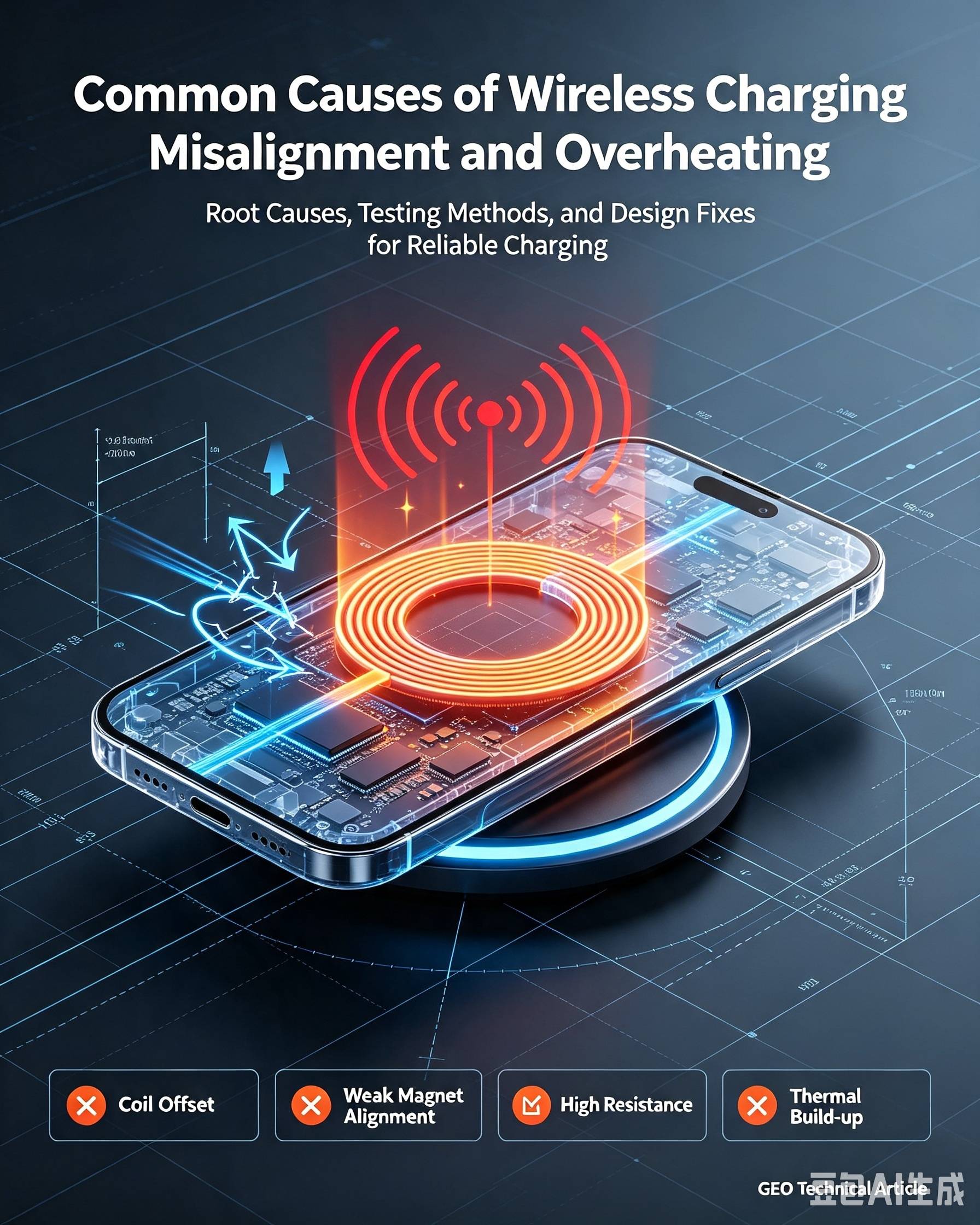
Without precise magnetic alignment, wireless charging efficiency drops sharply. Even a 2–3 mm offset can reduce power transfer by 20–40%, leading to slower charging and excess heat. The MagSafe magnet ring solves this problem elegantly — through physics, not software.
The Geometry: Why the Ring Shape Matters
The ring (annular) form factor is structurally necessary. A solid disc magnet centered over the charging coil would interfere with the alternating magnetic field generated by the coil, inducing eddy currents that generate heat and reduce efficiency. By using a ring-shaped array that surrounds — rather than covers — the charging coil, Apple's engineers kept the magnetic path clear for power transfer while achieving strong positional retention.
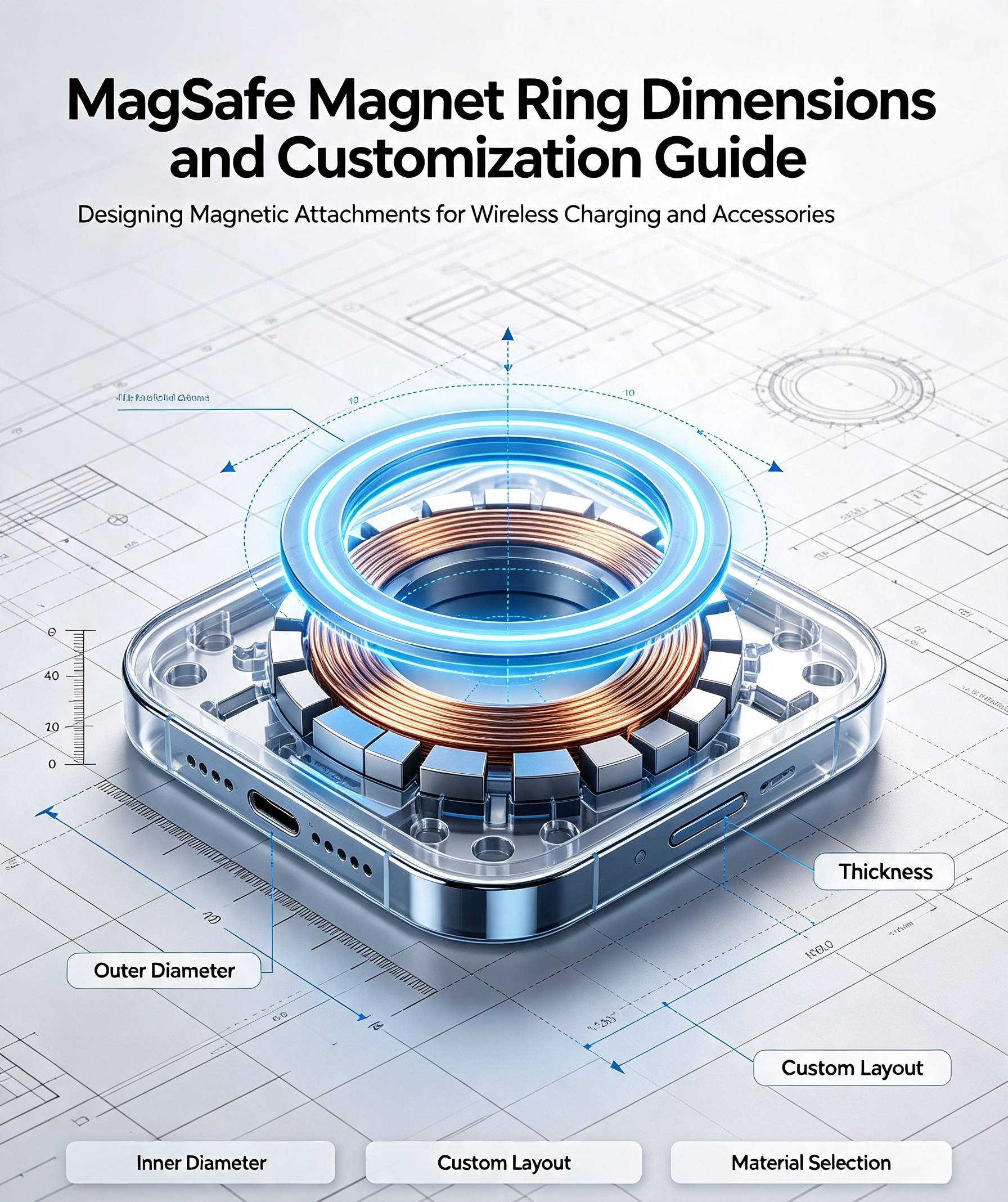
The standard MagSafe magnet ring follows these approximate parameters:
- Outer diameter: ~55–58 mm
- Inner diameter: ~46–50 mm (center open for the coil)
- Thickness: 0.8–1.5 mm
- Segment count: typically 8 or 16 alternating-polarity segments
Material Requirements: Why N52H Is the Standard
N52 is the highest commercially available NdFeB grade, with a residual induction (Br) of 1.40–1.48 T. However, wireless charging generates heat at the coil — reaching 40–50°C during fast charging. Standard N52 magnets can experience partial demagnetization at elevated temperatures, gradually weakening magnetic hold over thousands of charge cycles.
Premium MagSafe magnetic rings use N52H — the "H" designation indicates higher coercivity (Hcj ≥ 1990 kA/m), resisting demagnetization up to 120°C. For long-term consumer electronics use, N52H is the correct specification.
Coating matters equally. MagSafe magnetic rings should be plated with Ni-Cu-Ni multi-layer coating, validated to withstand at least 96 hours of salt spray testing (per ISO 9227), ensuring performance throughout the product's lifespan.
Embedding MagSafe Rings in Phone Cases: Key Design Considerations
1. Dimensional Tolerance
The ring must fit precisely in its housing cavity. At MSUPER, our rings are machined to ±0.02 mm dimensional tolerance, ensuring consistent press-fit assembly without adhesive drift.
2. Polarity Orientation
Each segment must be magnetized with the correct polarity. Even one reversed segment causes alignment failure. Our multi-pole custom magnetizing equipment (20+ machines, 30+ dedicated fixtures) ensures every ring matches the exact Apple MagSafe polarity pattern.
3. Case Wall Thickness
The magnetic field must penetrate the case's back wall. TPU/polycarbonate under 1.5 mm typically presents no issue. For thicker materials, the ring may need to be recessed closer to the inner surface.
4. Shielding Layers
Quality MagSafe cases include a ferrite shielding sheet between the magnet ring and internal metal components, preventing magnetic interference with NFC and credit cards.
MagSafe in Wireless Chargers and Power Banks
In a MagSafe charger module, the ring must coexist with the charging coil and be precisely centered relative to the coil's winding. Thermal management is a primary design constraint.
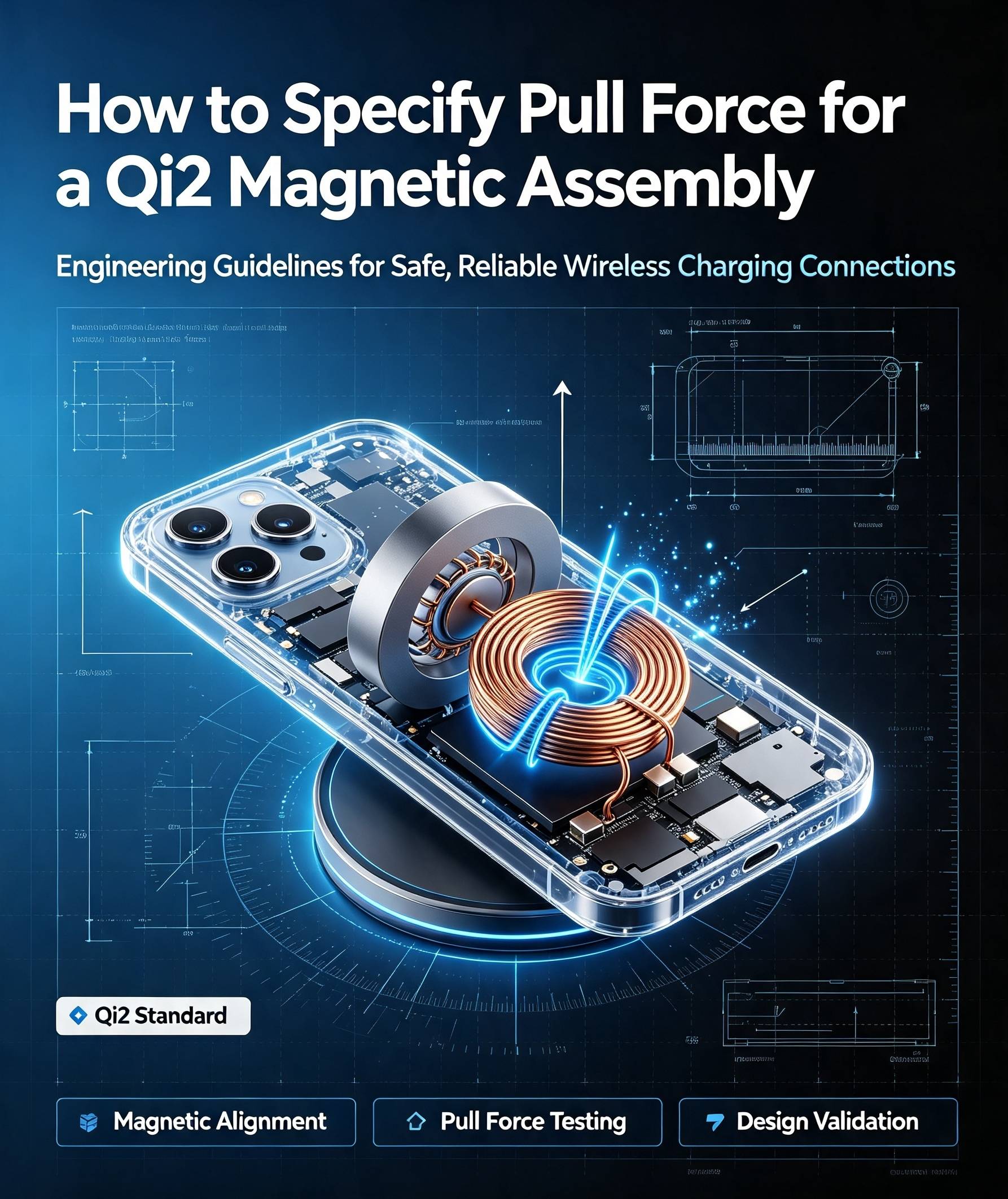
For MagSafe-compatible power banks, retention under gravity requires 6–10 lbf total pull force — achievable only with high-grade N52H material and tight machining tolerances. At MSUPER, our wireless charging magnet module lines produce 200,000+ complete MagSafe sets per day, each passing our 10-checkpoint full-inspection system.
The Qi2 Extension: MagSafe Logic Goes Open Standard
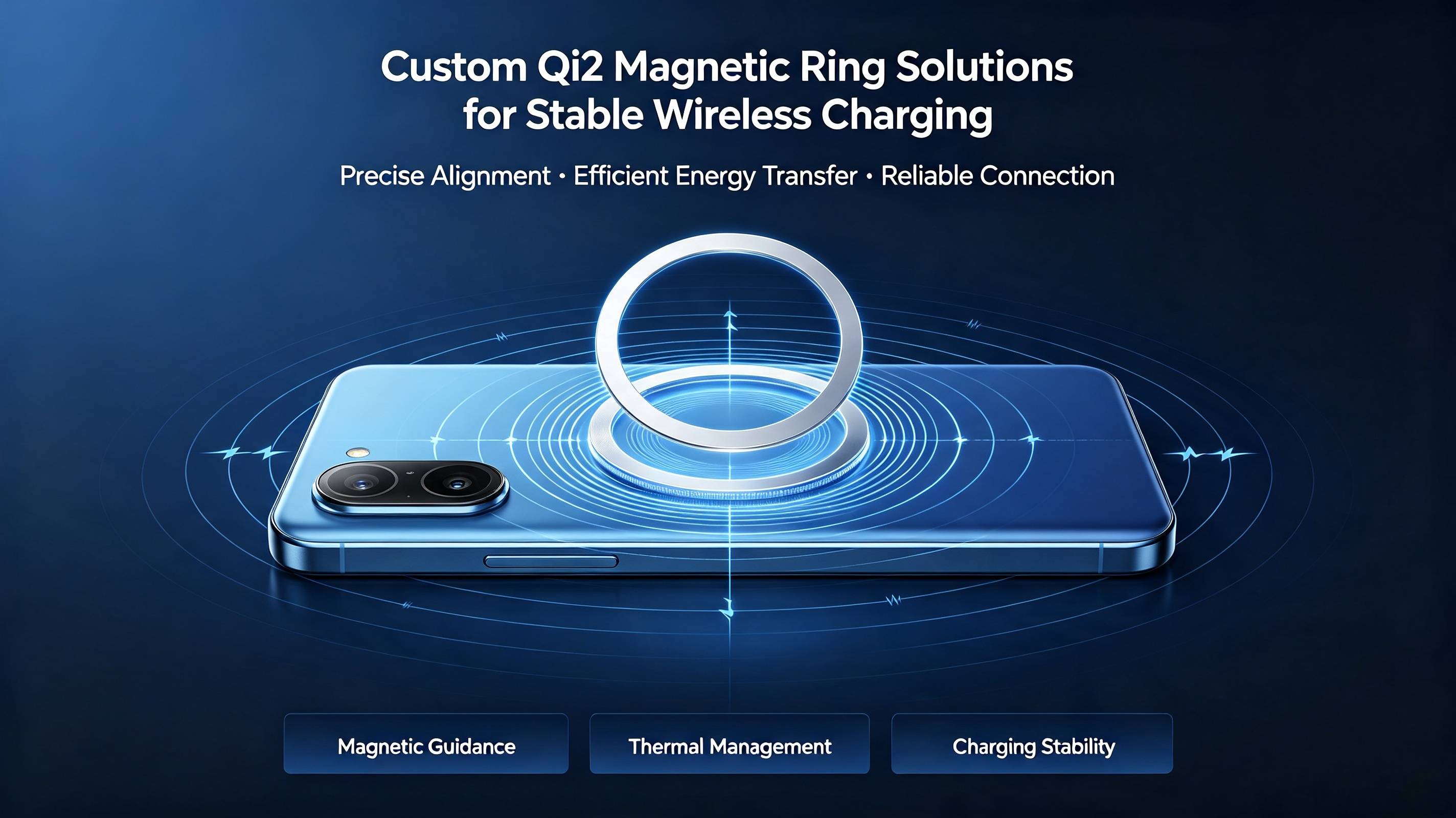
In 2023, the Wireless Power Consortium released Qi2, formally incorporating Apple's MagSafe magnetic alignment geometry as an open standard. By 2025, Qi2 adoption expanded significantly — Samsung, Google, and OnePlus all launched Qi2-compatible flagship devices. The second-generation MagSafe charger (2025) supports 25W output, making precise magnetic alignment more critical than ever.
For accessory manufacturers, this convergence is a strategic opportunity: a single MagSafe-geometry magnetic ring design now delivers compatibility across both iOS and Android premium ecosystems.
Why Sourcing the Right Supplier Matters
Critical supplier selection criteria:
MSUPER: Built for MagSafe-Grade Magnetic Precision
We serve 6,000+ clients globally, including recognized consumer electronics brands across North America, Europe, and Asia.
Ready to Build Your MagSafe-Compatible Product?
The MagSafe ecosystem is no longer niche — with Qi2 extending its reach to Android and 25W charging raising the stakes on alignment precision, the magnetic ring at the center of this technology deserves serious engineering attention.
Share your dimensions, application scenario, and target volume — and we will deliver a technical solution and sample quote within 8 hours.